

Standards documents are often hundreds of pages long, filled with complex math and legal language. It is easy to get lost and miss the simple instructions you need for your job. The IEEE C57.12.90 standard is the main guide for transformer testing. It states that you must apply the DC test voltage for one minute and that the voltage level depends on the winding rating to ensure consistent, comparable results across the industry. I always keep a copy of IEEE C57.12.90 in my office. It resolves arguments. When a client asks why I am testing their 11kV unit at 5kV DC, I point to this standard. It provides a safe baseline that everyone agrees on. The standard differentiates between “Acceptance Testing” (for new equipment) and “Maintenance Testing” (for service-aged equipment).
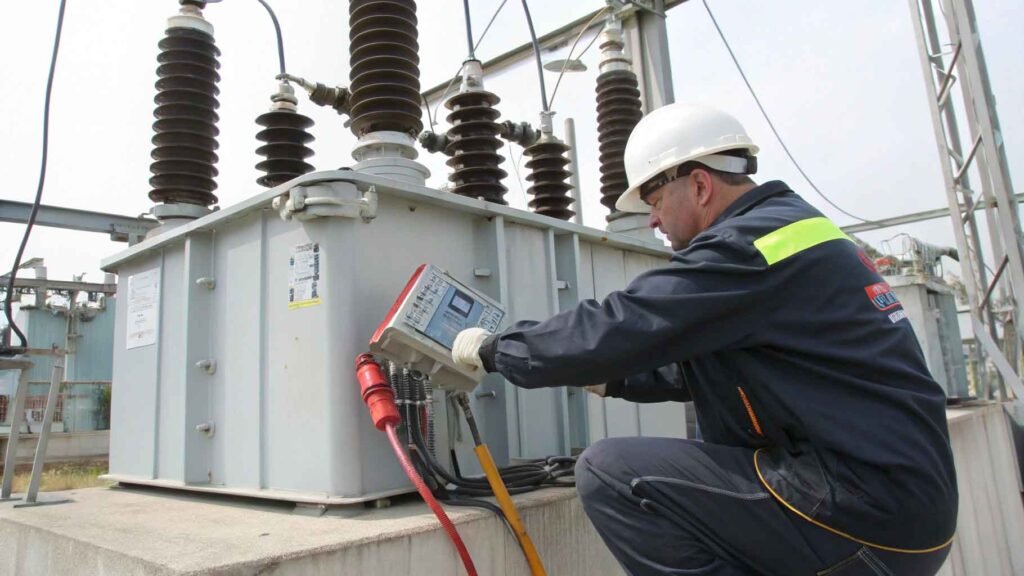
For maintenance, we are usually more gentle. The goal is to trend the data over time, not to stress the insulation to its breaking point. Another important part of the standard is the duration. You cannot just flash the voltage for 5 seconds. You must hold it for 60 seconds. This allows the capacitive charging current to die down, so you are measuring the true resistance. In international trade, I also look at IEC 60076, which is the European equivalent. While the numbers vary slightly, the principle is the same: scale your DC test voltage to the AC rating of the winding. Here is a simplified breakdown of how the standards view test voltages:
| Standard Component | Requirement | My Practical Interpretation |
| Test Duration | 60 seconds (1 minute). | Wait for the needle to stop moving. If you record the value too early, it will be falsely low. |
| Voltage Polarity | Negative to Winding, Positive to Ground. | This pushes the leakage current from the copper, through the insulation, to the tank. |
| Temperature Correction | Correct to 20°C or 40°C. | Resistance changes with heat. You must use a formula to compare hot and cold tests. |
| Discharge Time | 4 times the test duration. | If you test for 1 minute, you must ground the winding for 4 minutes to discharge the stored energy. |
Minimum acceptable megger readings for oil-filled vs. dry-type transformers?
You run the test, and the screen shows “200 Megohms.” Is that good? Is that bad? Without a reference point, the number on the screen is meaningless. The minimum acceptable reading depends heavily on the insulation type. Generally, oil-filled transformers should show much higher resistance values than dry-type transformers. The old rule of “1 Megohm per 1000 Volts” is the absolute minimum, but healthy modern transformers should test much higher. I have seen many operators panic because a dry-type transformer tested lower than an oil-filled one. This is comparing apples to oranges.
Oil-filled transformers use oil and paper. The oil is a fantastic insulator. If the oil is clean and dry, you should see readings in the Gigohms (thousands of Megohms). If an oil-filled unit reads only 100 Megohms, I would be very worried. It suggests the oil is wet or carbonized. Dry-type transformers use air and varnish. They are open to the atmosphere. On a humid day, they absorb moisture from the air. Their resistance will naturally be lower. A reading of 500 Megohms might be perfectly fine for a dry-type unit, especially if it has been sitting offline. Temperature is the invisible killer of accuracy here. Insulation resistance drops dramatically as temperature rises.
A transformer that tests at 2000 MΩ at 20°C might test at only 200 MΩ at 50°C. Both readings indicate the same health condition. You must correct for temperature to know the truth. Here is a table of minimum values I look for in the field (corrected to 20°C):
| Transformer Type | 1 Minute Minimum Value (Megohms) | Good Value (Megohms) | Why the difference? |
| Oil-Filled (HV > 69kV) | 1000 MΩ | > 10,000 MΩ | High-quality oil and sealed tanks prevent moisture ingress. |
| Oil-Filled (MV < 35kV) | 100 MΩ | > 2,000 MΩ | Smaller volume of insulation, but still sealed. |
| Dry-Type (Resin Cast) | 100 MΩ | > 1,000 MΩ | Solid resin blocks moisture well, similar to plastic. |
| Dry-Type (VPI/Open) | 10 MΩ to 100 MΩ | > 500 MΩ | Open windings absorb humidity from the factory air. |
Why is Short Circuit Current (>3mA) important for large transformers?
Have you ever stared at a tester screen where the numbers just keep jumping around and never settle? It wastes your time and makes you doubt your data. Large transformers have massive capacitance, acting like giant batteries. You need a tester with a high short circuit current (at least 3mA, ideally 5mA) to charge this capacitance quickly.
If your current is too low (<1mA), the voltage will sag, and the reading will be unstable. This is a technical detail that many procurement managers overlook. They buy the cheapest tester that says “5kV.” But if that tester only puts out 0.5mA of current, it is useless for a large power transformer. Think of the transformer insulation as a large empty water tank. The voltage is the water pressure. The current is the flow rate of the hose.
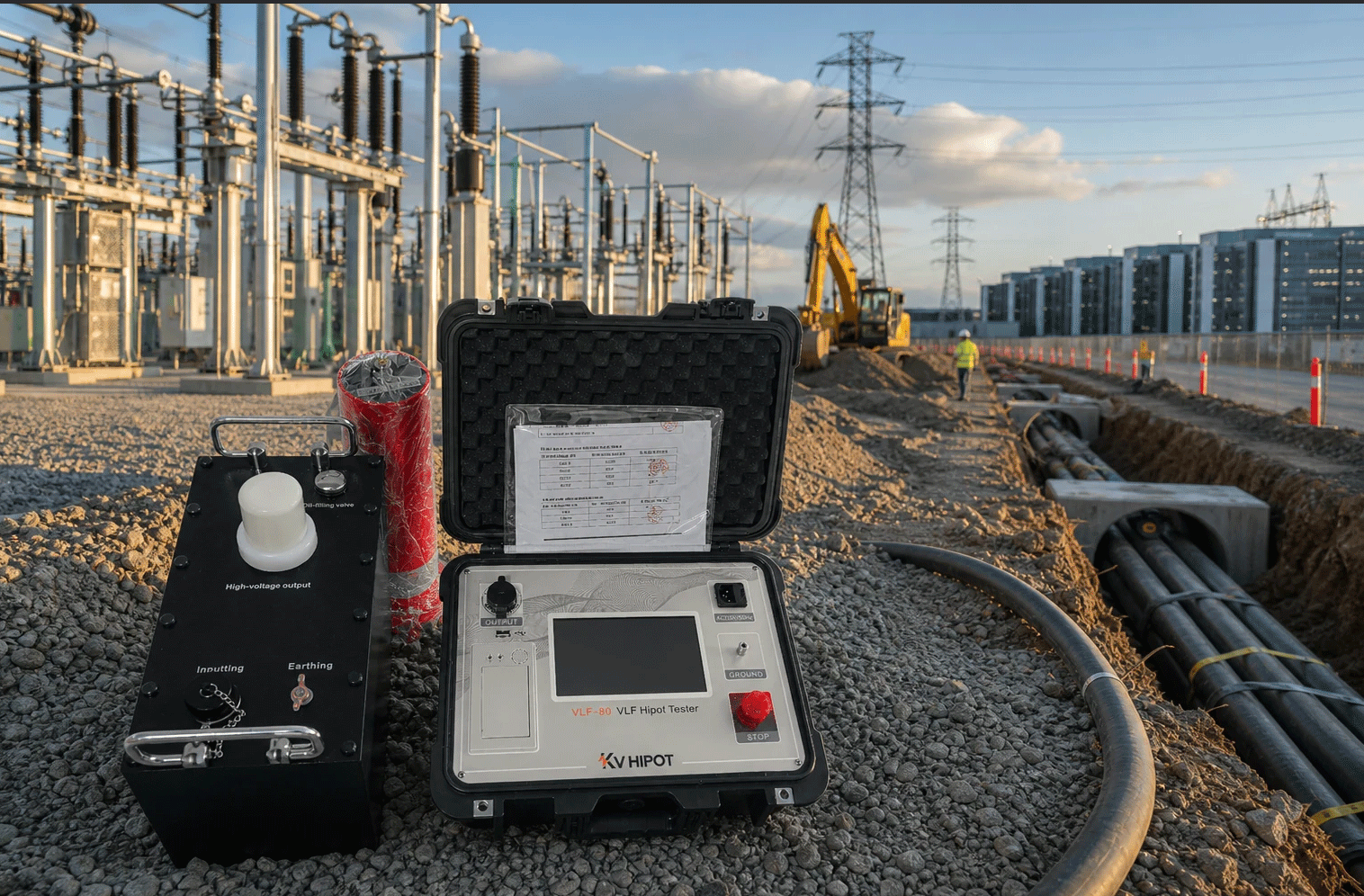
If you use a garden hose (low current) to fill a swimming pool (large transformer), it will take forever to reach the right pressure. If you use a fire hose (high current), you fill it up fast. When I test large units for power generation clients or substations, I use a heavy-duty tester. This provides enough “oomph” to charge the insulation quickly.
If the current is low, the voltage across the insulation ramps up very slowly. The “absorption current” we talked about earlier gets confused with the charging current. The needle wavers. You might stop the test early because you are frustrated, resulting in bad data. Here is why I insist on high short-circuit current for my equipment:
| Transformer Size (MVA) | Recommended Short Circuit Current | Result with Low Current Tester (<1mA) | Result with High Current Tester (>5mA) |
| Small (< 1 MVA) | 1 mA is fine. | Stable reading in 1 minute. | Stable reading in 30 seconds. |
| Medium (1 – 10 MVA) | 3 mA. | Reading fluctuates; takes 3-5 minutes to stabilize. | Stable reading in 1 minute. |
| Large (> 10 MVA) | 5 mA or more. | Voltage sags; reading never stabilizes; highly inaccurate. | fast charging; stable voltage; accurate resistance. |
| EHV Cables / Long Lines | 5 mA to 10 mA. | Impossible to test. | Essential for overcoming line capacitance. |
Conclusion
Selecting the right parameters for a Transformer Megger Test is not a guessing game; it is a science based on standards and physics. You must match the test voltage to the winding rating—using 500V for low voltage and up to 5kV for high voltage systems—to ensure you stress the insulation without damaging it. Equally important is interpreting the results based on the transformer type. Do not judge a dry-type transformer by oil-filled standards, and always remember to correct your readings for temperature.
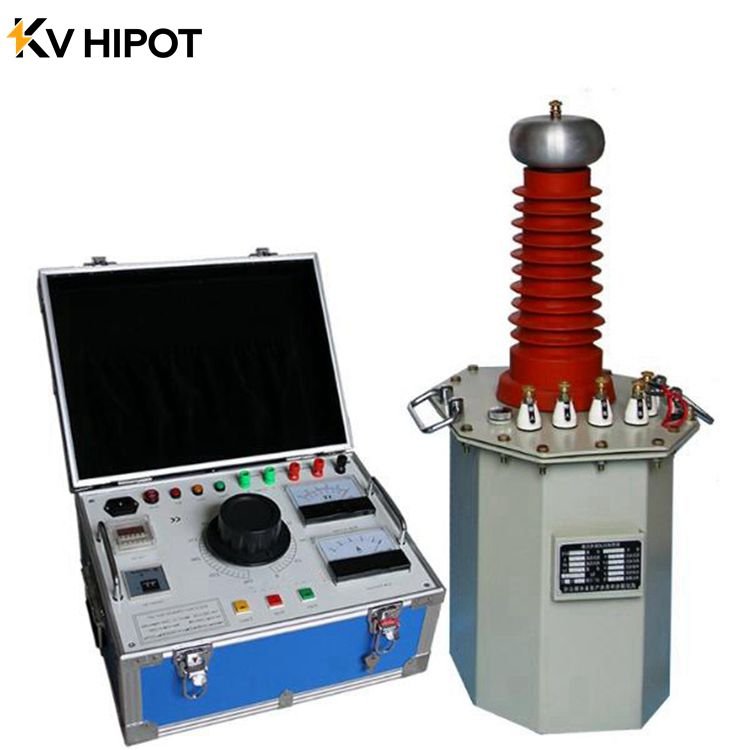
Finally, do not underestimate the power of your test equipment. For large industrial transformers, a tester with high short-circuit current (>3mA) is not a luxury; it is a necessity for stable, accurate data. At KV HIPOT, we design our insulation testers with these field realities in mind, ensuring you get the precision you need to certify your equipment with confidence.

 English
  ไทย
ไทย  Tiếng Việt
  العربية
  Русский
  Italiano
  Español
  한국어
한국어  Português do Brasil
  Français
  Español de México
  Português
  Türkçe
  Čeština
  Español de Argentina
  Slovenčina
  Dansk
Dansk  Polski
  Deutsch
  Ελληνικά
  O‘zbekcha
  Bahasa Indonesia
  Română