
What Should a VLF Tan Delta Tester RFQ Include?
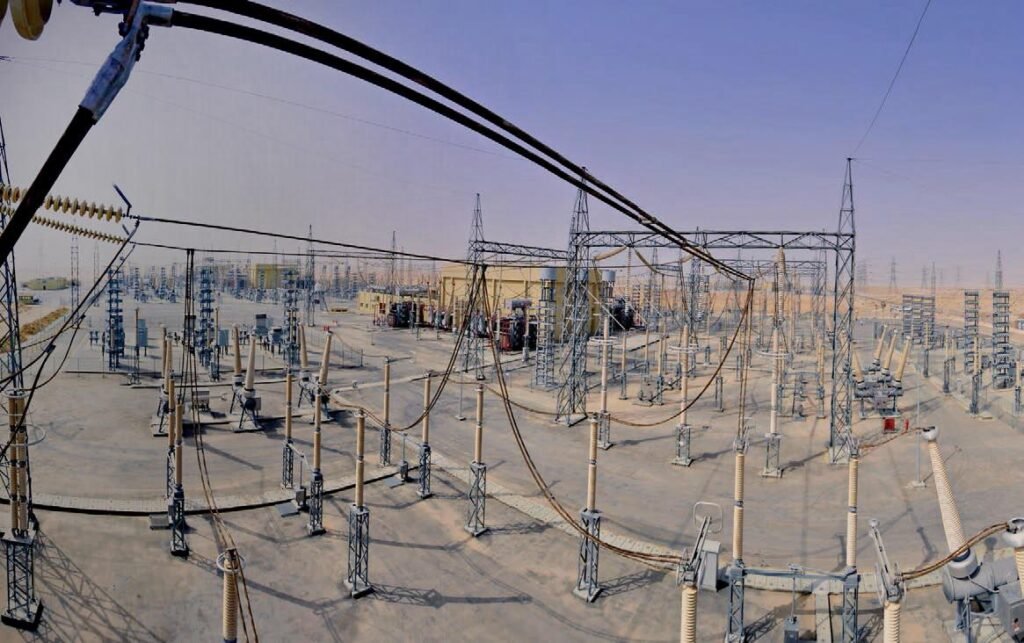
A VLF tan delta RFQ should define the cable assignment, required operating conditions and complete diagnostic scope before asking suppliers for prices. State the voltage convention, waveform, frequency, expected capacitance range and needed measurement functions together.
How Do You Choose a VLF Tan Delta Tester for Your Cable Portfolio?
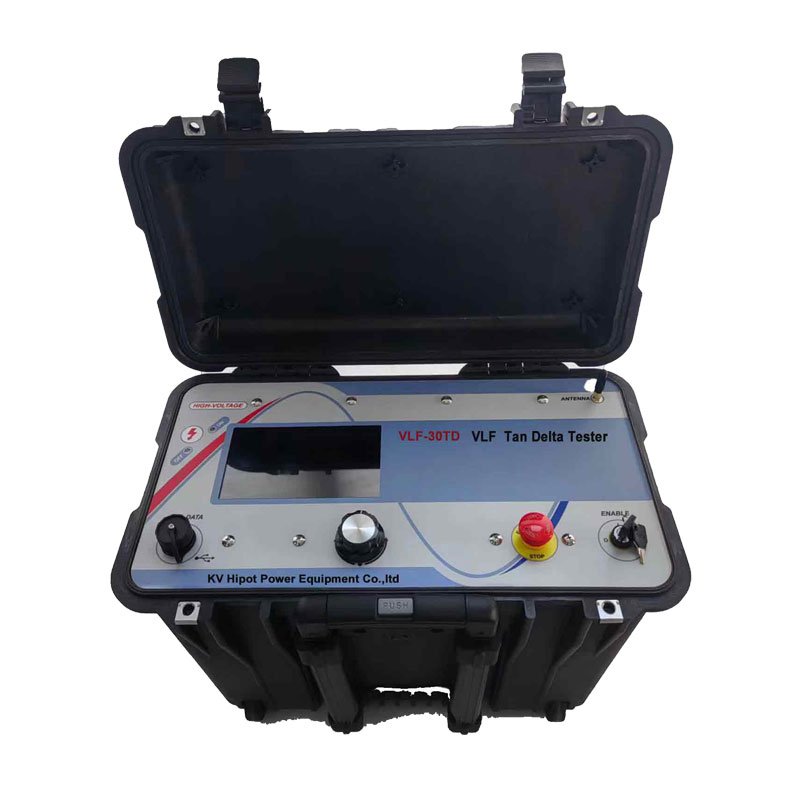
Choose a VLF tan delta tester around representative cable jobs: the smallest measuring load, routine feeders and the largest credible assignment at the required voltage and frequency. Then compare the diagnostic functions, complete carrying package and compatibility with equipment already owned.
Partial Discharge Test Set: A Practical Guide to Selecting a 50kV Partial Discharge Test System
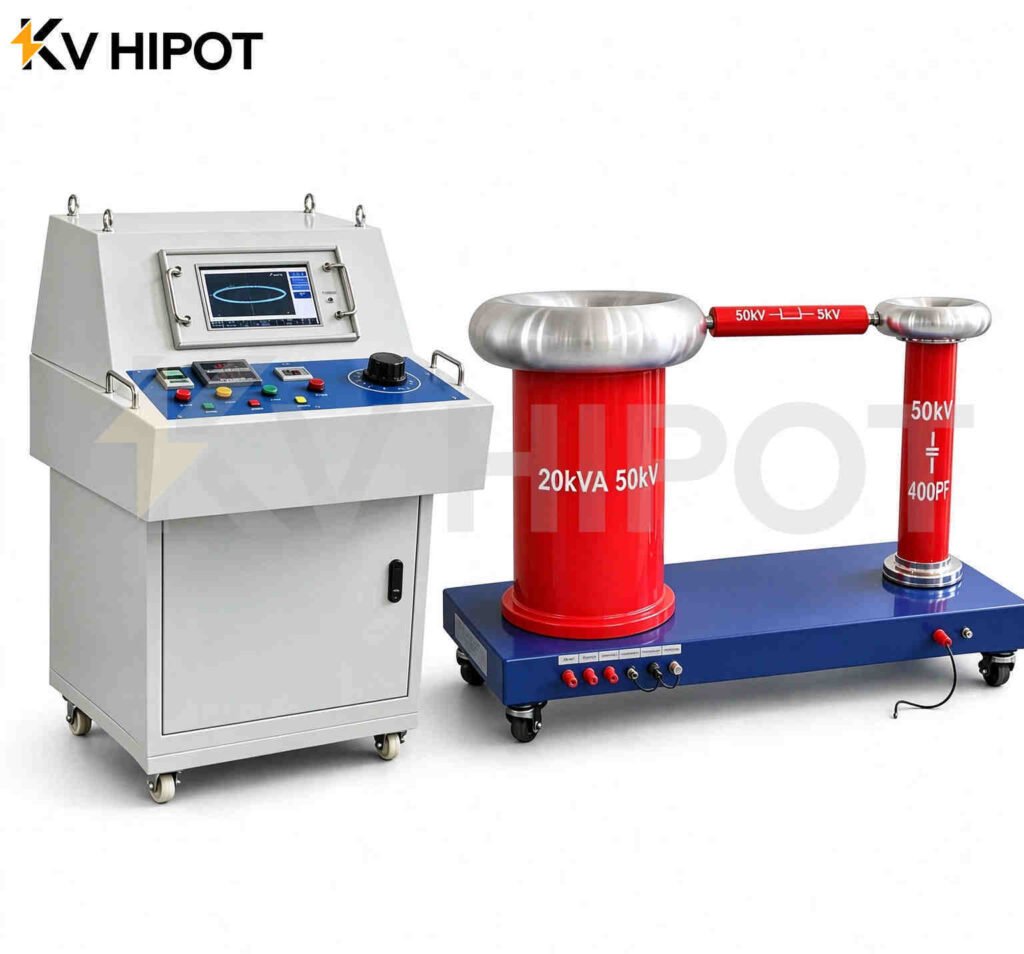
Power-frequency PD test system brings together an oil-immersed test transformer, automatic control console, digital PD detector, isolation transformer, coupling capacitor, and protective resistor. It is intended for laboratory and factory testing where both AC withstand testing and partial discharge measurement are required.
How Do VLF Withstand, Tan Delta, Partial Discharge and Insulation Resistance Tests Differ?
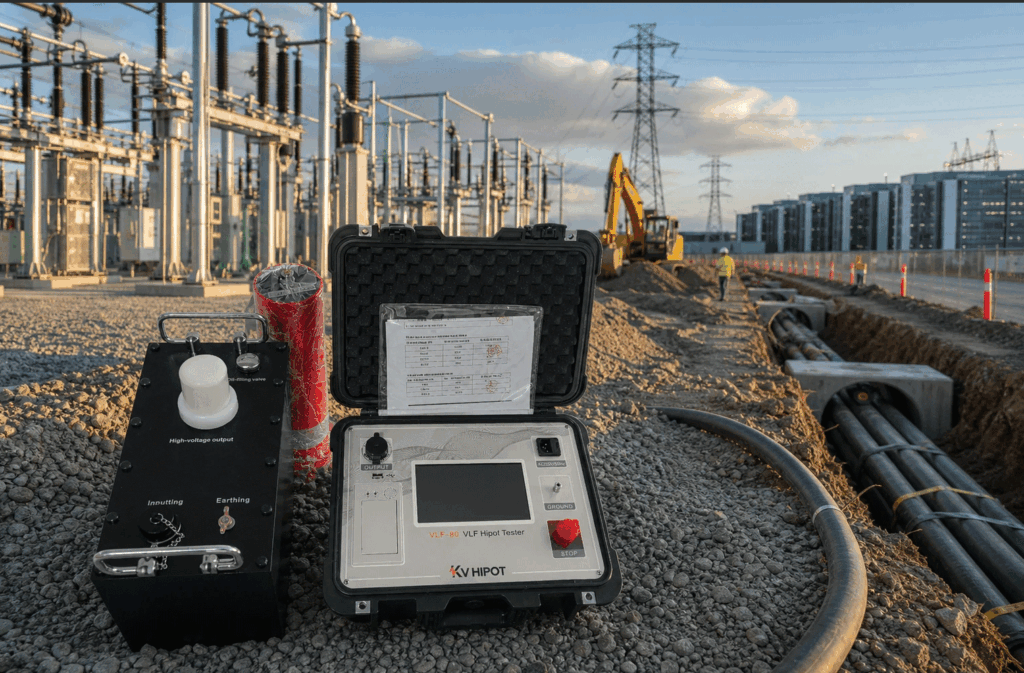
VLF withstand, tan delta, partial discharge and insulation resistance tests examine different aspects of a cable system. Withstand assesses survival of specified electrical stress; tan delta measures overall dielectric-loss behavior; PD examines detected localized discharge activity; insulation resistance evaluates a defined DC response. Select them for complementary questions. A favorable result from one method does not automatically replace another required measurement or cancel a valid concern from a different method.
What Does an Industrial Battery Discharger Actually Measure?
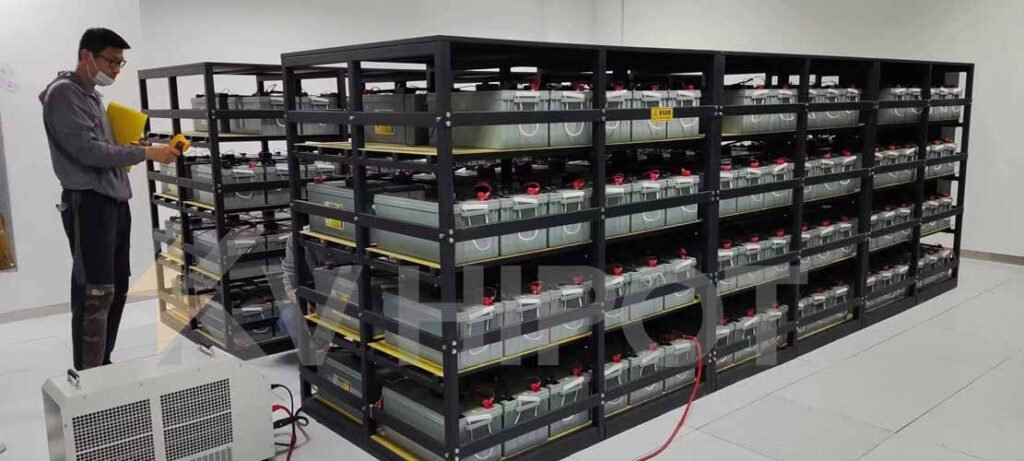
An industrial battery discharger applies a specified load and records current, voltage, time, and sometimes temperature and individual cell voltages. It measures delivered charge or energy to an agreed endpoint. Conductance and impedance tests provide condition indicators, but do not directly establish usable discharge capacity.
Pré-comissionamento vs Comissionamento: Testes Elétricos, Critérios de Aceitação e Preparação para a Energização
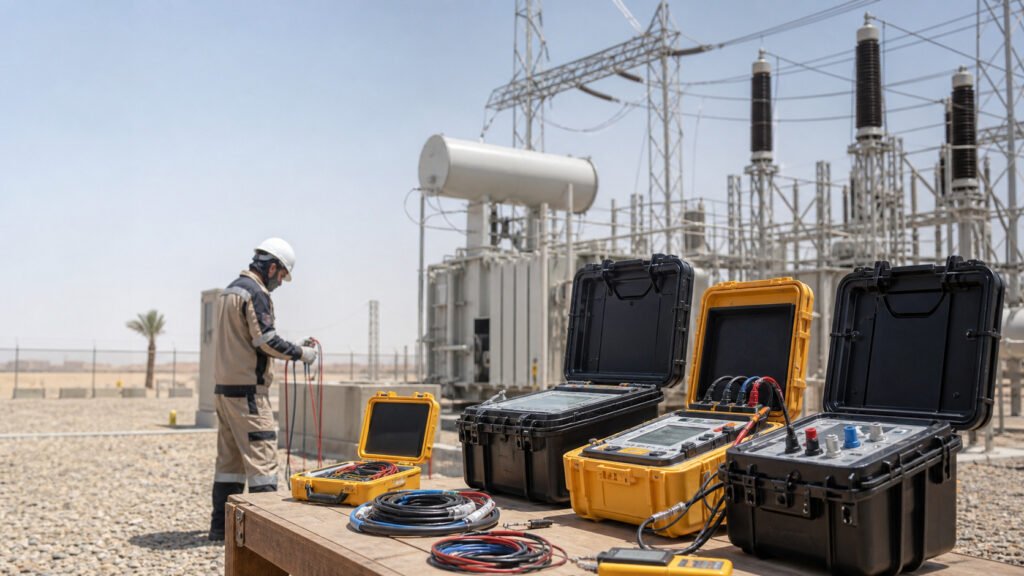
A pré-comissionamento elétrico verifica que o equipamento instalado está pronto para a próxima etapa de testes ou ativação aprovada. A comissionamento verifica que o equipamento e os sistemas interconectados realizam suas funções previstas. O comissionamento inclui atividades antes da ativação, durante a ativação controlada e em condições operacionais.
O que é um verificador de tan delta VLF e o que ele pode revelar sobre a isolação dos cabos?
A VLF tan delta tester provides system-level dielectric-loss evidence. Use it to establish documented behavior, compare genuinely comparable records, and direct further investigation when the evidence warrants it. Before accepting a conclusion, verify the measurement boundary, the equipment’s supported conditions, and the interpretation basis. The most useful outcome is a justified next action for the identified circuit, with a clear statement of what the test has and has not established.
Quais especificações técnicas determinam o desempenho de um verificador de hipoteses VLF?
Evaluating a VLF hipot tester requires prioritizing continuous capacitive load capability (µF at 0.1 Hz) over mere open-circuit test voltage. Match your required IEEE 400.2 withstand levels with pure sinusoidal waveform purity, fine current resolution, automatic frequency adaptation, and fail-safe discharge systems. Before purchasing, verify manufacturer load-derating curves against your longest installed cable circuits to guarantee reliable field performance.
Power-Frequency High-Voltage Tests: Key Principles, Equipment, Procedures, and Safety
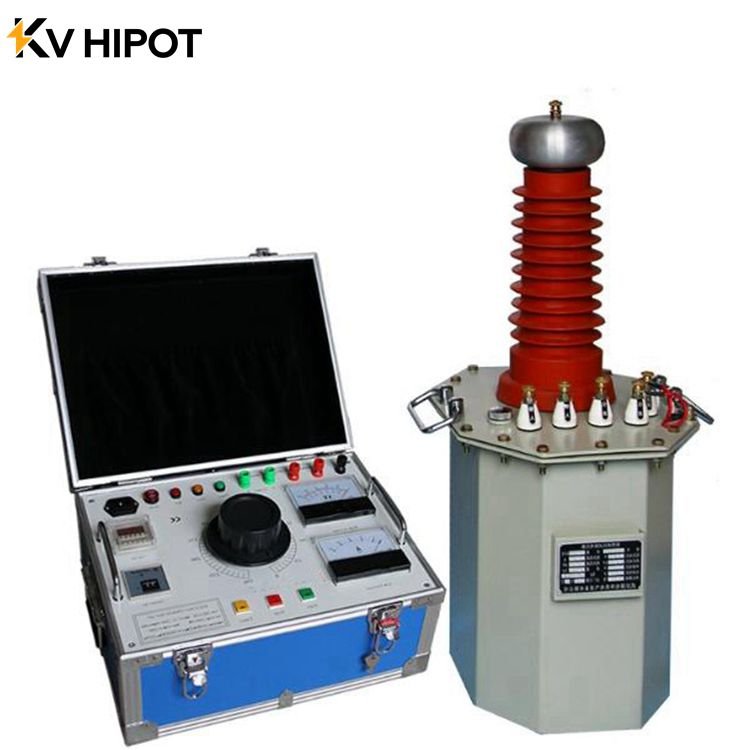
Power-frequency AC withstand voltage testing is the most effective and direct method for assessing the insulation condition of electrical equipment. It can determine whether the equipment can continue to operate and is also an important means of preventing insulation failures.
Troubleshooting Guide for 33kV Cable Hipot Test Voltage Drops?
Troubleshooting voltage drops during a 33kV cable hipot test requires a clear understanding of capacitive loads, proper grounding, and insulation behavior. By lowering your VLF frequency to manage capacitance, resolving ground loops, and recognizing the signs of partial discharge, you can maintain stable test voltages.

 English
 ไทย
 Tiếng Việt
 العربية
 Русский
 Italiano
 Español
 한국어
 Português do Brasil
 Français
 Español de México
 Português
 Türkçe
 Čeština
 Español de Argentina
 Slovenčina
 Dansk
 Polski
 Deutsch
 Ελληνικά
 O‘zbekcha
 Bahasa Indonesia
 Română