

High SF6 moisture levels threaten GIS insulation, risking catastrophic failures. Struggling to select the right tester? Understanding key specifications guarantees accurate diagnostics and robust electrical network safety.
The key technical specifications of an SF6 dew point meter include a -80°C to +20°C measurement range, ±0.5°C accuracy, and automatic temperature and pressure compensation. Advanced devices also feature an internal gas recovery pump to ensure zero F-gas emissions during high-voltage equipment micro-water measurements.
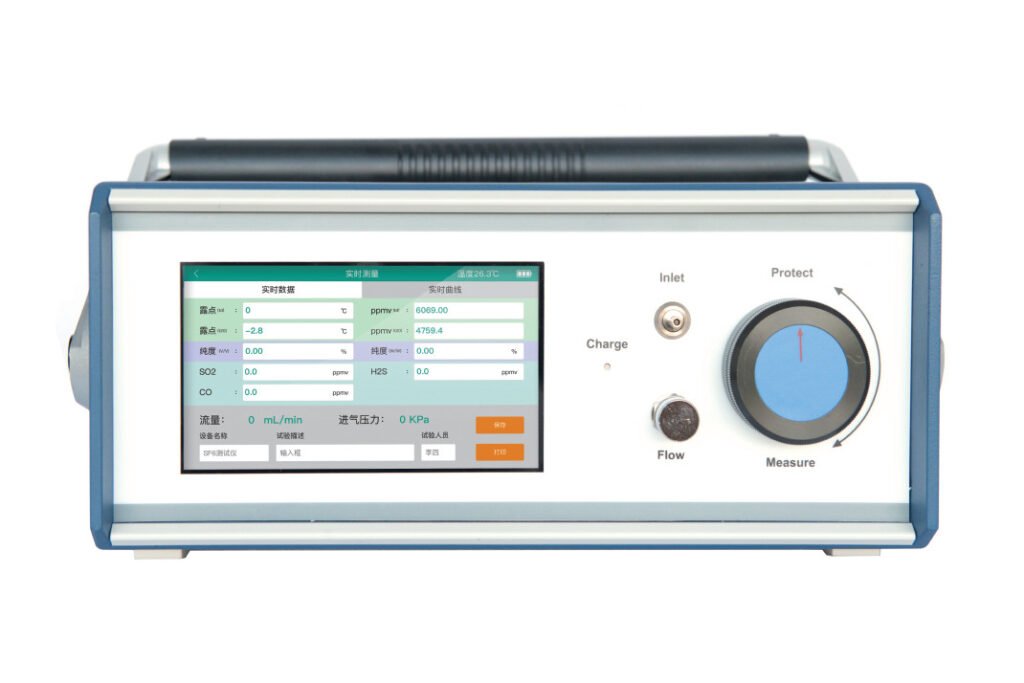
Selecting the right SF6 gas testing equipment can be overwhelming given the technical jargon. Let’s break down these critical specifications so you can confidently safeguard your high-voltage assets and prevent future outages.
What is the acceptable dew point range for SF6 gas according to IEC 60480?
Moisture degrades SF6 insulation, causing arc-induced toxic byproducts. Not knowing safe limits puts your equipment at risk. Mastering IEC standards ensures your maintenance protocols prevent costly substation outages.
According to IEC 60480, the acceptable dew point limit for recycled SF6 gas in high-voltage equipment is -36°C or lower at atmospheric pressure. For new SF6 gas, the moisture content limit is stricter, typically requiring a dew point of -40°C to prevent internal condensation and maintain insulation integrity.
Why Strict Moisture Limits Matter in High Voltage Testing
For electrical engineers and EPC contractors, maintaining the correct moisture levels in Gas-Insulated Switchgear (GIS) and circuit breakers is not just a best practice—it is a critical safety requirement. When an electrical arc occurs during normal circuit breaker operations, the SF6 gas temporarily breaks down. If the moisture content exceeds the IEC 60480 parameters, the water molecules react with the SF6 decomposition byproducts to form highly corrosive compounds, such as hydrofluoric acid (HF) and sulfur dioxide (SO2).
These acidic byproducts aggressively corrode the internal metal contacts and solid spacers of the switchgear, eventually leading to catastrophic dielectric failure and dangerous arc flashes. Understanding the baseline standards helps third-party electrical testing service companies deliver accurate pass/fail reports.
Comparing International Moisture Standards
To help maintenance teams benchmark their testing, here is a structured comparison of typical moisture standards used in the power industry:
| Standard / Gas State | Allowable Dew Point (Atmospheric) | Max Moisture Concentration (ppmv) | Primary Application |
|---|---|---|---|
| New SF6 Gas (IEC 60376) | <-40°C | < 12 ppmv | Factory Acceptance Testing (FAT) |
| Recycled SF6 (IEC 60480) | <-36°C | < 15 ppmv | Substation Maintenance |
| Operating GIS (IEEE) | <-30°C | < 24 ppmv | Routine Field Diagnostics |
| Critical Danger Level | >-15°C | > 150 ppmv | Immediate Decommissioning Required |
As a factory-direct supplier, KV HIPOT ensures our SF6 dew point meters are pre-programmed to help operators instantly compare their field readings against these international standards, providing clear, actionable data for power grid operations.
How accurate should a micro-water moisture analyzer be?
Inaccurate moisture readings lead to false confidence or unnecessary maintenance. Can you trust your current analyzer? High-precision testing is non-negotiable for diagnosing the true health of your gas-insulated switchgear.
A reliable micro-water moisture analyzer should offer a dew point accuracy of at least ±0.5°C to ±2°C. High precision ensures accurate detection of trace moisture, protecting transformers and GIS from insulation breakdown while allowing EPCs and maintenance engineers to make confident operational decisions.
The Impact of Precision on Substation Maintenance
In the realm of high-voltage testing, precision is paramount. An error margin of just 3°C to 5°C in dew point measurement can mean the difference between passing a newly commissioned GIS unit and failing it. For original equipment manufacturers (OEMs) conducting Factory Acceptance Tests (FAT), testing precision directly impacts brand reputation and product safety.
If a micro-water moisture analyzer lacks precision, maintenance teams might incorrectly assume the SF6 gas is dry enough, leaving the equipment vulnerable to internal condensation during temperature drops. Conversely, false-positive “wet” readings can trigger unnecessary, expensive gas reclamation processes.
Accuracy Classes in Dew Point Meters
When sourcing electrical test equipment, purchasing managers should categorize testers by their accuracy classes to ensure they fit the intended application:
| Accuracy Class | Dew Point Variance | Best For | Typical Users |
|---|---|---|---|
| High-End / Lab Grade | ±0.5°C | Baseline calibration, FAT testing, R&D | OEMs, Metrology Institutes, High Voltage Labs |
| Standard Professional | ±1.0°C to ±2.0°C | Routine field testing, commissioning | EPC Contractors, Power Grid O&M Teams |
| Basic / Obsolete | ±3.0°C to ±5.0°C | Rough estimations (Not recommended for GIS) | N/A (Poses safety risks) |
At KV HIPOT, our SF6 micro-water testers are engineered with high-precision sensors that guarantee an accuracy of ±0.5°C, providing heavy industry and utility companies with the exact data needed to optimize their maintenance budgets and ensure continuous power transmission.
What sensor technologies are used in SF6 dew point testing?
Outdated sensors drift over time, causing hidden moisture buildup. Are you using obsolete tech? Modern sensing technologies guarantee rapid response and long-term stability, dramatically reducing your substation testing times.
SF6 dew point testing primarily utilizes advanced polymer capacitance sensors and chilled mirror technologies. Polymer sensors offer fast response times and field portability, while chilled mirror technology provides absolute, drift-free measurements ideal for laboratory-grade calibration and high-precision diagnostic testing in extreme conditions.
Comparing Modern Dew Point Sensor Technologies
The heart of any micro-water moisture analyzer is its sensor. As technology has evolved, the power testing industry has moved away from slow, analog sensors toward highly responsive digital technologies. Understanding these technologies is crucial for buyers who want high ROI and low maintenance costs from their testing equipment.
1. Polymer Capacitance Sensors: These are the most popular sensors for portable field equipment. They consist of a thin layer of moisture-sensitive polymer sandwiched between two conductive layers. As the SF6 gas flows over the sensor, the polymer absorbs or releases water vapor, changing the electrical capacitance. This change is instantly converted into a dew point reading. They are highly favored by field engineers in the Middle East, Southeast Asia, and South America due to their ruggedness and fast response times.
2. Chilled Mirror Technology: This is an absolute measurement method. A mirror inside the tester is cooled until dew or frost forms on its surface, which is detected by an optical sensor. The exact temperature of the mirror at that moment is the true dew point. While incredibly accurate, these systems are typically heavier and more expensive, making them best suited for third-party calibration labs.
Sensor Technology Comparison Matrix
| Sensor Type | Response Time | Accuracy | Field Portability | Maintenance Requirement |
|---|---|---|---|---|
| Polymer Capacitance | < 3 minutes | ±1.0°C to ±2.0°C | Excellent (Lightweight) | Low (Periodic calibration) |
| Chilled Mirror | 5 – 10 minutes | ±0.2°C to ±0.5°C | Poor (Heavy, fragile) | High (Mirror cleaning needed) |
| Ceramic Oxide | 10+ minutes | ±2.0°C to ±3.0°C | Moderate | Medium (Prone to drift) |
For our international B2B clients, KV HIPOT integrates premium polymer capacitance sensors into our portable field testers, ensuring rapid, precise measurements that keep your maintenance workflows efficient.
Why do you need temperature compensation in SF6 moisture measurement?
Extreme ambient temperatures skew moisture readings, leading to false pass/fail verdicts. Does your equipment struggle in the field? Automatic temperature compensation ensures precise dew point analysis regardless of environmental extremes.
Temperature compensation is essential because relative humidity and sensor electrical properties fluctuate with ambient heat. Automatic compensation algorithms adjust raw sensor data, guaranteeing that the displayed SF6 dew point value remains highly accurate whether testing in a freezing winter or a scorching Middle Eastern desert environment.
Ensuring Stability Across Diverse Environments
Electrical contractors and utility companies operate in wildly diverse climates. From the humid environments of Southeast Asia (like Thailand and Vietnam) to the extreme heat of Saudi Arabia and the UAE, ambient temperature significantly impacts how moisture behaves in a gas and how sensors interpret that moisture.
Without temperature compensation, a micro-water tester measures the relative humidity and temperature of the gas passing over the sensor, but the physical characteristics of the sensor’s polymer or ceramic layers drift as they heat up or cool down. If an EPC contractor is testing a circuit breaker outdoors at 45°C, a non-compensated meter might falsely register a dangerously high moisture level, simply because the sensor itself is overheated.
How Automatic Compensation Works
Modern intelligent test equipment utilizes dual-sensor technology—simultaneously measuring the gas moisture and the real-time ambient temperature. The device’s microprocessor then applies complex algorithmic corrections to the raw data.
| Ambient Testing Condition | Raw Sensor Reading (Uncompensated) | Compensated True Dew Point | Risk Without Compensation |
|---|---|---|---|
| Desert Heat (+45°C) | -28°C (Falsely Wet) | -38°C (Safe) | Unnecessary gas replacement |
| Lab Standard (+20°C) | -38°C | -38°C | None |
| Winter Freeze (-10°C) | -45°C (Falsely Dry) | -38°C (Safe) | Undetected moisture risks |
By investing in KV HIPOT’s testing equipment with built-in environmental compensation, power engineering service companies can trust their data completely, avoiding costly misdiagnoses and ensuring their electrical infrastructure remains compliant with stringent safety protocols.
How does operating pressure affect SF6 dew point readings?
Ignoring gas pressure when measuring moisture leads to dangerous miscalculations. Are your readings normalized? Understanding the pressure-dew point relationship is vital for assessing true condensation risks inside your breakers.
Operating pressure significantly affects SF6 dew point readings because gas compression increases moisture concentration. A high-quality dew point meter uses automatic pressure compensation to convert the measured dew point at system pressure to standard atmospheric pressure, enabling accurate comparison against IEC safety thresholds.
Normalizing Pressure Data for Accurate Diagnostics
In Gas-Insulated Switchgear (GIS) and high-voltage circuit breakers, SF6 gas is heavily compressed, typically operating at pressures between 4 to 7 bar (0.4 to 0.7 MPa). The physical rule of gases states that as pressure increases, the concentration of water vapor in a given volume also increases, forcing the dew point temperature higher.
If a maintenance engineer tests the gas directly from a pressurized breaker without normalizing the data, the reading will show a much higher dew point than what the IEC standards dictate. IEC 60480 and IEEE standards generally reference dew point values at standard atmospheric pressure (1 bar / 0.1 MPa). Failing to convert the reading leads to severe misinterpretation, often resulting in the unnecessary decommissioning of perfectly healthy SF6 gas.
The Mathematics of Pressure Compensation
To avoid manual calculations and human error in the field, advanced SF6 test equipment features internal pressure sensors and automatic conversion algorithms.
| Actual System Pressure | Measured Dew Point (at Pressure) | Converted Atmospheric Dew Point | Status (Based on IEC 60480: -36°C limit) |
|---|---|---|---|
| 1 Bar (Atmospheric) | -38°C | -38°C | PASS |
| 5 Bar (Operating) | -22°C | -38°C | PASS (Requires auto-conversion) |
| 5 Bar (Operating) | -15°C | -32°C | FAIL (Gas is too wet) |
Our engineering team at KV HIPOT designs SF6 testers that automatically measure system pressure and instantly display both the pressurized dew point and the normalized atmospheric dew point. This feature is particularly valuable for railway infrastructure and offshore wind farm contractors who need fast, foolproof data under tight time constraints.
Can one analyzer test multiple SF6 parameters (purity, moisture, decomposition)?
Carrying multiple testers is inefficient and increases gas venting risks. Tired of hauling excessive gear? Comprehensive multi-parameter analyzers streamline field operations, saving time while enforcing strict environmental compliance.
Yes, advanced comprehensive SF6 gas analyzers simultaneously test moisture (dew point), gas purity, and decomposition byproducts (SO2, HF) in a single cycle. Modern multi-parameter devices also integrate internal gas recovery pumps, ensuring zero F-gas emissions during the testing of high-voltage switchgear and meeting strict environmental regulations.
[image placeholder]
Streamlining EPC and Maintenance Workflows
For decades, third-party electrical testing service companies and utility maintenance teams had to carry three separate heavy instruments to a substation: a micro-water meter for moisture, a purity analyzer, and a toxic gas detector for decomposition products. This approach not only wastes labor hours but also requires connecting and disconnecting hoses multiple times, which increases the risk of venting SF6—a potent greenhouse gas—into the atmosphere.
Today’s market demands efficiency and environmental stewardship. A comprehensive SF6 gas analyzer consolidates all these functions into a single, highly portable unit. By utilizing parallel gas routing internally, the machine measures dew point, purity (%), and SO2/HF levels simultaneously within 3 to 5 minutes.
The Value of Zero-Emission Gas Recovery
A standout specification in premium analyzers is the internal gas recovery pump. Instead of venting the sampled gas into the air, the pump captures the tested SF6 and injects it back into the circuit breaker.
| Feature | Single-Parameter Testers | Comprehensive Analyzer w/ Pump | Business Impact for Buyers |
|---|---|---|---|
| Testing Time | 15 – 20 minutes | < 5 minutes | 300% faster substation workflow |
| Gas Venting | High (Multiple purges) | Zero (Pumped back to asset) | Meets strict F-gas regulations |
| Portability | Requires multiple hard cases | One compact unit | Lower shipping & handling costs |
| Gestión de datos | Fragmented reports | Unified digital test report | Easier compliance for EPCs |
As an OEM manufacturer with deep supply chain advantages, KV HIPOT offers highly customizable SF6 comprehensive testing equipment. We accept small batches (MOQ of 1) and provide robust supply chain services, making us the ideal partner for multinational EPCs and regional distributors looking for high-margin, top-tier testing solutions.
Conclusión
Selecting the right SF6 dew point meter requires prioritizing high accuracy, advanced sensor technology, and automatic temperature and pressure compensation. For modern EPCs and utility maintenance teams, utilizing comprehensive multi-parameter analyzers with zero-emission gas recovery pumps is essential for efficiency and environmental compliance. By investing in factory-direct, customized high-voltage testing solutions, you ensure your GIS and switchgear operate safely under any condition. Need to upgrade your SF6 testing equipment? Contact us today for reliable, precision-engineered solutions tailored to your specific power project needs.


 English
  ไทย
ไทย  Tiếng Việt
  العربية
  Русский
  Italiano
  Español
  한국어
한국어  Português do Brasil
  Français
  Español de México
  Português
  Türkçe
  Čeština
  Español de Argentina
  Slovenčina
  Dansk
Dansk  Polski
  Deutsch
  Ελληνικά
  O‘zbekcha
  Bahasa Indonesia
  Română