


What Is the BDV of Transformer Oil?
BDV means breakdown voltage. It is the voltage at which an electrical discharge bridges the space between two electrodes immersed in an insulating liquid under specified test conditions.
The instrument does not measure the transformer’s operating voltage. It tests a small liquid sample in a standardized test cell. Consequently, a reading such as 50 kV means that breakdown occurred at 50 kV in that particular electrode system and test sequence. It does not mean that the oil can be assigned a universal “50 kV transformer rating.”
Breakdown voltage is especially influenced by:
- Free water and moisture-associated contamination
- Cellulosic fibers
- Dust and conductive particles
- Gas bubbles
- Test-cell cleanliness
- Electrode condition and spacing
- Sample temperature and handling
- Stirring and rest intervals
- Applied-voltage waveform and rise rate
A low BDV result is therefore an effective warning that contamination may be present. A high result, however, does not prove that every oil property is satisfactory.
ASTM makes this limitation explicit in its descriptions of both ASTM D877 e ASTM D1816: a high breakdown voltage does not necessarily demonstrate the absence of all contaminants. The contaminants present may simply not be concentrated in the electrode gap sufficiently to reduce the measured average.
That leads to the first important rule:
Use BDV as one oil-condition indicator, not as a complete transformer-oil diagnosis.
Is There a Formula for Transformer Oil BDV?
There is no reliable formula that can calculate the BDV of an actual transformer-oil sample from the transformer rating or oil name.
The average electrical stress between electrodes can be expressed in simplified form as:
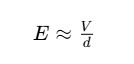
where:
- E is the approximate average electric field;
- V is the applied voltage;
- d is the electrode gap.
This equation does not predict when a real oil sample will break down. Local electric fields are affected by electrode shape, surface condition, particles, fibers, moisture and bubbles. Breakdown is also statistically variable, which is why recognized methods require a controlled sequence of repeated breakdowns instead of relying on one spark event.
The correct BDV must therefore be established experimentally with an Oil BDV Tester operating according to the required standard.
Why the Test Standard Must Be Selected Before Testing
“Transformer oil BDV” is not one universal procedure. IEC and ASTM methods use different electrode systems and test conditions. Results obtained under different methods must not be treated as interchangeable.
The current IEC method is IEC 60156:2025, Insulating liquids—Determination of the breakdown voltage at power frequency—Test method. IEC describes it as applicable to insulating liquids with a nominal viscosity up to 350 mm²/s at 40°C. It can be used for acceptance testing of unused liquids and for condition assessment of samples taken during equipment monitoring and maintenance.
ASTM commonly uses two methods:
- ASTM D877 with disk electrodes;
- ASTM D1816 with VDE electrodes.
IEC 60156 vs ASTM D1816 vs ASTM D877
| Metodo | Electrode system | Typical use | Important interpretation point |
|---|---|---|---|
| IEC 60156:2025 | IEC-specified electrode arrangement | Acceptance and condition assessment of insulating liquids | Follow the current edition and the exact selected procedure |
| ASTM D1816 | VDE electrodes | Filtered and degassed transformer liquids and diagnostic testing | Particularly sensitive to moisture when cellulosic fibers are present |
| ASTM D877 | Disk electrodes | Applications and specifications that explicitly require disk electrodes | At higher BDV levels it may be less sensitive to some contamination |
ASTM states that D877 is used for certain liquids as delivered and that D1816 should be used for filtered and degassed liquids in relevant applications. ASTM also notes that D877 sensitivity decreases when applied test voltages become relatively high.
This distinction matters commercially as well as technically. Before purchasing an Oil BDV Tester, the buyer must know:
- Which standard is named in the tender or laboratory procedure;
- Which electrode sets are supplied;
- Which gaps can be set accurately;
- Whether separate oil cups are available;
- Whether the instrument stores automatic programs for each method;
- Whether stirring and rest times can be controlled as required.
A tester advertised only as “IEC/ASTM compatible” is not enough. The supplier should provide a configuration list showing the test cup, electrode type, gap gauge and programmed sequence for each claimed method.
Why Transformer Voltage Class Does Not Create One BDV Limit
Searches such as “BDV of 11 kV transformer oil” or “minimum BDV for a 400 kV transformer” assume that transformer voltage directly determines the oil test result. The relationship is more complex.
Evaluation may depend on:
- Test standard and electrode system
- Unused, processed, newly filled or in-service oil
- Mineral oil, natural ester, synthetic ester or silicone liquid
- Equipment category and highest operating voltage
- Manufacturer and utility requirements
- Sampling location
- Temperature and laboratory conditions
- Historical trend
- Other oil-analysis results
IEC 60156 specifies how to determine the breakdown voltage. Maintenance and acceptance criteria must be taken from the applicable equipment or oil-management document. For mineral oil in service, IEC 60422:2024 provides supervision and maintenance guidance, including evaluation procedures and approaches to reconditioning or reclaiming oil.
Therefore, the correct answer for any voltage class is conditional rather than absolute.
What Is the BDV of Oil in an 11 kV Transformer?
There is no universal value based only on the 11 kV rating. Identify the test method, oil condition and owner’s acceptance criteria first.
If a result appears low:
- Confirm the selected IEC or ASTM program.
- Verify the electrode type and gap.
- Inspect the test cup and electrodes.
- Review how the sample was collected and transported.
- Repeat the test with a representative fresh sample when necessary.
- Compare the result with the transformer manufacturer’s or operator’s criteria.
- Check moisture and other oil-quality indicators before deciding on treatment.
What Is the BDV of Oil in a 33 kV Transformer?
The same principle applies. A 33 kV transformer does not automatically create a universal 50 kV or 60 kV BDV requirement.
The operator should distinguish between:
- New oil received from the supplier;
- Oil processed before filling;
- Oil sampled after filling;
- Oil already in service;
- Oil sampled after filtration or vacuum treatment.
Each condition may be governed by a different acceptance or maintenance requirement even when the transformer rating remains 33 kV.
What Is the BDV of Oil in a 400 kV Transformer?
A 400 kV transformer requires a carefully controlled oil-management program, but the Oil BDV Tester does not reproduce the transformer’s 400 kV operating voltage.
The tester applies the voltage required by the liquid test method across a small, defined electrode gap. Tester range should therefore be selected according to the standard, expected breakdown range and project specification—not by matching the transformer voltage rating.
For critical extra-high-voltage equipment, BDV should be evaluated together with water content, dielectric dissipation factor, acidity, resistivity, dissolved gas analysis and other specified tests.
How to Obtain a Representative Transformer-Oil Sample
An advanced Oil BDV Tester cannot correct a contaminated or unrepresentative sample. Sampling is often the largest uncontrolled source of error.
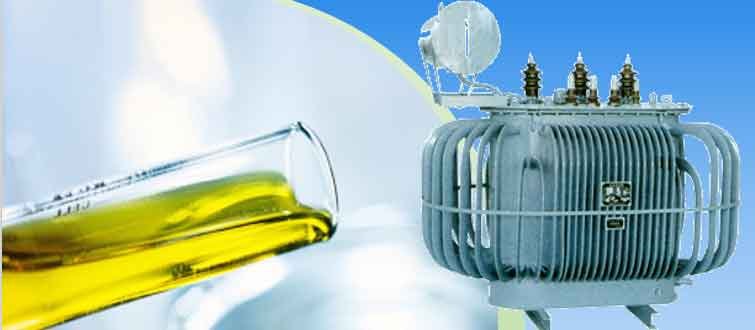
Prepare the Sampling Equipment
Use a clean, dry container that is suitable for insulating liquid. Do not use a container that previously held water, detergent, solvent or another oil unless it has been prepared under the approved laboratory procedure.
Avoid:
- Wet bottles or caps
- Dusty funnels
- Cotton fibers
- Paper wiping materials that shed fibers
- Open containers exposed to humid air
- Unapproved plastic containers that may contaminate the sample
Select the Correct Sampling Point
The sampling location must represent the oil volume under investigation. A sample from stagnant pipework or an unflushed valve may not represent the transformer tank.
Follow the equipment procedure for flushing the sampling connection, collecting the sample and preventing air or moisture ingress. Record the transformer, compartment, sampling point, date, temperature and oil condition.
Minimize Air Bubbles and Moisture Exposure
Do not shake the sample unnecessarily. Avoid turbulent pouring and allow the sample to reach the condition required by the selected test method.
Bubbles can create premature breakdown paths. Long exposure to humid air can also change the sample, particularly when the oil and environment are at different temperatures.
How to Prepare the Oil Test Cup and Electrodes
The test cup is part of the measurement system. Residue from a previous sample can make a clean oil appear poor, while incorrect cleaning can leave moisture, fibers or solvent behind.
Before testing:
- Inspect the cup for contamination, scratches and residue.
- Inspect the electrodes for pitting, carbon deposits and deformation.
- Clean the cup and electrodes according to the laboratory and tester instructions.
- Confirm that cleaning fluid has been fully removed.
- Set and verify the electrode gap with the correct gauge.
- Ensure the electrode locking mechanism cannot move during testing.
- Rinse or condition the vessel as required by the selected method.
Do not assume that a displayed gap setting is correct without physical verification. A small gap error changes the electrical stress and makes comparison unreliable.
Electrodes also require periodic inspection and, when necessary, refinishing or replacement. A polished but geometrically incorrect electrode is not equivalent to the specified electrode system.
Step-by-Step Oil BDV Test Procedure
The exact values for gap, rise rate, stirring and intervals must come from the applicable edition of IEC 60156 or the relevant ASTM method. The following workflow explains the common logic without replacing the standard.
Step 1: Select the Standard Program
Choose IEC 60156, ASTM D1816, ASTM D877 or the approved customer program. Confirm that the installed cup and electrodes match the program.
Step 2: Verify the Test Cell
Check electrode geometry, gap, cleanliness and secure installation. Confirm that the cup, lid and stirrer belong to the intended method.
Step 3: Introduce the Sample
Pour the sample carefully to reduce bubbles. Fill to the specified level and avoid contaminating the liquid with fingers, cloth fibers or dirty tools.
Step 4: Allow the Required Conditioning Time
The sample may require a defined rest or stirring period before the first breakdown. This allows bubbles and flow disturbances to stabilize according to the method.
Step 5: Start the Automatic Sequence
The Oil BDV Tester raises the AC voltage at the programmed rate. When breakdown is detected, the instrument rapidly interrupts the output and records the voltage.
The breakdown-detection and cutoff response matters. Excessive energy can carbonize the sample, damage the electrodes and influence subsequent results.
Step 6: Stir and Wait Between Breakdowns
The test method defines how the sample is stirred and how long it rests between repeated breakdowns. The objective is to redistribute breakdown products and create a controlled, repeatable sequence.
Step 7: Complete All Required Breakdowns
Do not stop after the first reading. Record each individual breakdown voltage and the calculated final result required by the method.
Step 8: Review the Sequence
Before accepting the displayed average, review:
- Individual breakdown values;
- Spread between readings;
- Any unusual first result;
- Whether the automatic sequence was interrupted;
- Whether arcing or carbon deposits were excessive;
- Whether bubbles or visible particles were present.
Step 9: Save and Report the Result
The report should identify:
- Sample source and identification
- Oil type and condition
- Test standard and edition
- Electrode type and gap
- Instrument identification
- Test date and operator
- Sample and room condition where required
- Each breakdown value
- Calculated result
- Any deviation or observation
An average without the test method and individual readings is not a complete technical record.
Why Repeated BDV Readings May Be Different
Insulating-liquid breakdown is sensitive to the position of contaminants in the electrode gap. Variability is therefore expected, but excessive spread should not be ignored.
| Observation | Possible cause | Recommended check |
|---|---|---|
| First reading is unusually low | Bubble, cup conditioning, particle in the gap or sampling disturbance | Review preparation and the method’s conditioning sequence |
| All readings are consistently low | Moisture, fibers, particles or genuinely poor oil condition | Confirm with a fresh representative sample and supporting oil tests |
| Readings are widely scattered | Uneven contamination, poor stirring, bubbles, electrode damage or gap error | Inspect the cell, repeat preparation and review the sample |
| Results increase steadily | Breakdown products or contaminants may be moving out of the gap; cup conditioning may be incomplete | Check procedure, stirring and vessel condition |
| Results decrease steadily | Increasing carbonization, excessive discharge energy or contamination | Inspect electrodes, cutoff behavior and sample condition |
| Same oil differs between instruments | Different methods, electrodes, gaps, rise rates, calibration or cup condition | Compare the full test configuration, not only the average |
An automatic tester should make these patterns visible by displaying or exporting every breakdown value rather than reporting only one average.
What to Do After a Low BDV Result
A low result is a reason to investigate, not an automatic instruction to replace the oil immediately.
Use the following decision sequence:
Low BDV result
        ↓
Confirm standard, electrodes, gap and program
        ↓
Inspect cup cleanliness and sample handling
        ↓
Repeat with a representative sample if justified
        ↓
Compare with owner/manufacturer criteria
        ↓
Check water, particles and other oil properties
        ↓
Decide on filtration, dehydration, reconditioning or further diagnosis
Possible actions include:
- Correcting the test setup;
- Collecting a new sample;
- Vacuum dehydration;
- Filtration;
- Reconditioning or reclaiming oil;
- Investigating a contamination source;
- Performing additional transformer diagnostics.
The correct action depends on the oil condition, transformer criticality, supporting tests and applicable maintenance procedure.
Why High BDV Does Not Prove the Oil Is Healthy
BDV is particularly useful for detecting certain forms of physical contamination, but it does not directly provide all the information needed to evaluate oil or transformer condition.
Depending on the equipment and maintenance program, additional tests may include:
| Test | What it helps assess |
|---|---|
| Water content | Moisture concentration in the liquid |
| Dissipation factor | Polar contaminants and dielectric losses |
| Resistivity | Conductive contamination and oil quality |
| Acidity | Oxidation and aging |
| Interfacial tension | Polar degradation products |
| Dissolved gas analysis | Electrical and thermal fault gases |
| Furan analysis | Paper-insulation degradation |
| Particle analysis | Solid contamination |
A high BDV result should therefore be described as a satisfactory result under the selected BDV method—not proof that the transformer or oil is free from every defect.
How Does an Automatic Oil BDV Tester Work?
An automatic Oil BDV Tester combines several controlled functions:
AC power input
      ↓
Controlled voltage regulator
      ↓
High-voltage transformer
      ↓
Oil test cup and electrodes
      ↓
Breakdown detection and rapid cutoff
      ↓
Automatic stirring and waiting sequence
      ↓
Calculation, storage and report output
Automation reduces operator-to-operator variation, but only when the programmed method, installed electrodes and sample preparation are correct.
Important performance areas include:
- Voltage measurement accuracy;
- Programmable rise rate;
- Output waveform and frequency;
- Breakdown detection response;
- Automatic cutoff;
- Repeatable stirring;
- Timing accuracy;
- Electrode alignment;
- Safety interlock;
- Data traceability.
80 kV vs 100 kV Oil BDV Tester
The maximum output rating is one of the first specifications buyers compare, but the highest number is not automatically the best choice.
When an 80 kV Tester May Be Suitable
An 80 kV tester may be suitable when:
- It covers the required standard and expected result range;
- The customer specification does not require a higher output;
- The supplied electrode sets and automatic programs match the application;
- Portability and cost are important;
- The measurement and safety performance meet laboratory requirements.
When a 100 kV Tester May Be Preferred
A 100 kV tester may be preferred when:
- A tender or internal procedure requires it;
- Higher breakdown values are expected;
- Additional measurement headroom is required;
- The laboratory handles a wider variety of insulating liquids;
- The higher range is supported by suitable accuracy and calibration.
What Matters Beyond Maximum Voltage
Compare the following before choosing:
| Selection factor | Question for the supplier |
|---|---|
| Standards | Which exact IEC and ASTM programs are installed? |
| Electrodes | Which electrode types are included and optional? |
| Gap setting | Are certified or suitable gap gauges supplied? |
| Oil cups | Can separate cups be used for different methods or oils? |
| Stirring | Is stirring automatic and program-controlled? |
| Rise rate | Can the required rate be programmed and verified? |
| Breakdown cutoff | How quickly is the HV output interrupted? |
| Data | Are all individual breakdowns stored and exported? |
| Calibration | Is a traceable calibration certificate available? |
| Safety | Does the tester have a cover interlock, grounding and emergency protection? |
| Power supply | Is the input voltage suitable for the destination country? |
| Service | Are spare cups, electrodes and calibration support available? |
Output range is only one part of a defensible purchase decision.
Oil BDV Tester Calibration and Quality Control
Routine confidence in the tester requires more than switching it on and checking that voltage appears.
A laboratory quality program may include:
- Scheduled traceable calibration;
- Verification of voltage accuracy and rise rate;
- Timer and stirring checks;
- Inspection of the HV cutoff function;
- Electrode geometry and gap verification;
- Test-cup cleanliness controls;
- Repeat testing with a controlled reference or laboratory comparison sample;
- Recording maintenance, electrode replacement and software settings.
The calibration scope should match the functions that affect the reported result. A certificate listing only general electrical safety checks may not demonstrate BDV measurement performance.
Frequently Asked Questions
Can IEC 60156 and ASTM D1816 Results Be Compared Directly?
No. The methods use different electrode systems and test conditions. Compare results only when they were obtained under the same method and controlled conditions.
Does a High BDV Mean the Oil Contains No Water?
No. BDV may respond to moisture and contamination, but it is not a direct replacement for a quantitative water-content test.
Why Does the First Breakdown Sometimes Read Lower?
Possible causes include bubbles, particles in the gap, incomplete cup conditioning or sample disturbance. Review the complete sequence instead of deleting the result without a method-based justification.
Should Oil Be Replaced After One Low Result?
Not automatically. First confirm the method, cup, electrodes, sampling and repeatability. Then compare with the applicable criteria and supporting oil tests.
How Often Should an Oil BDV Tester Be Calibrated?
Follow the laboratory quality system, instrument manufacturer and customer requirements. Calibration frequency should also consider usage, transport, repairs and previous calibration stability.
Can One Tester Support Mineral Oil and Ester Fluids?
Potentially, but the applicable standard, viscosity range, cup-cleaning method, electrode configuration and program must be confirmed. Separate cups may help reduce cross-contamination.
Is a 100 kV Tester Required for a 400 kV Transformer?
Not simply because the transformer is rated 400 kV. Select the tester range according to the required liquid test method, expected breakdown range and project specification.
Conclusione
An Oil BDV Tester provides a fast and valuable indication of an insulating liquid’s ability to withstand electrical stress under a defined test method. The reliability of that indication depends on much more than the maximum tester voltage.
First select the correct standard. Then control sampling, cup cleanliness, electrodes, gap, stirring, timing and voltage rise. Review every breakdown value before accepting the average, and investigate low results using supporting oil tests rather than relying on one universal limit.
When selecting an 80 kV or 100 kV Oil BDV Tester, compare method support, electrodes, oil cups, automation, cutoff response, data reporting, calibration and safety—not only the output rating.
For a technically matched quotation, provide:
- Required standard and edition
- 80 kV or 100 kV output requirement
- Mineral oil, natural ester, synthetic ester or silicone liquid
- Required electrode sets and gaps
- Automatic stirring requirement
- Printer, USB or software reporting requirement
- Destination power supply
- Calibration-document requirements
With this information, the supplier can confirm the correct Oil BDV Tester configuration before quotation and avoid supplying an instrument that cannot reproduce the customer’s required test method.

 English
  ไทย
ไทย  Tiếng Việt
  العربية
  Русский
  Italiano
  Español
  한국어
한국어  Português do Brasil
  Français
  Español de México
  Português
  Türkçe
  Čeština
  Español de Argentina
  Slovenčina
  Dansk
Dansk  Polski
  Deutsch
  Ελληνικά
  O‘zbekcha
  Bahasa Indonesia
  Română