

What an SFRA Test Actually Tells You About a Transformer
When a transformer has been transported, exposed to a through-fault, or operated for years under demanding conditions, the most important question is not simply whether it can still be energized. The real question is whether its internal mechanical condition has changed in a way that deserves further investigation. Sweep Frequency Response Analysis, or SFRA, gives transformer owners a non-invasive way to compare the electrical response of windings over a broad frequency range and look for meaningful differences.
A transformer winding is not only a coil with resistance. Electrically, it behaves as a complex network of inductance, capacitance, resistance, and magnetic coupling. Its response therefore depends partly on physical geometry: the position of windings, the relationship between winding sections, the core, leads, clamping structures, and other internal elements. If that geometry changes, the measured frequency-response curve may change as well. This is why SFRA can support investigations into possible winding movement, deformation, displacement, or other mechanical changes.
What Is a Sweep Frequency Response Analyzer and Why Is It Used?
Power transformers are massive investments, but hidden mechanical faults can lead to catastrophic failures. When a transformer suffers a short circuit fault or a severe transport shock, the internal damage isn’t always visible. Without an accurate diagnosis, you risk unexpected downtime and massive repair bills. Fortunately, a Sweep Frequency Response Analyzer provides a non-destructive way to “see” inside your transformer, revealing structural integrity issues before they turn into major disasters.
A Sweep Frequency Response Analyzer (SFRA) is a specialized electrical testing instrument used to evaluate the mechanical and electrical integrity of power transformer cores and windings. It injects multiple frequencies to create a unique frequency response “fingerprint,” detecting hidden winding deformations without opening the transformer tank.
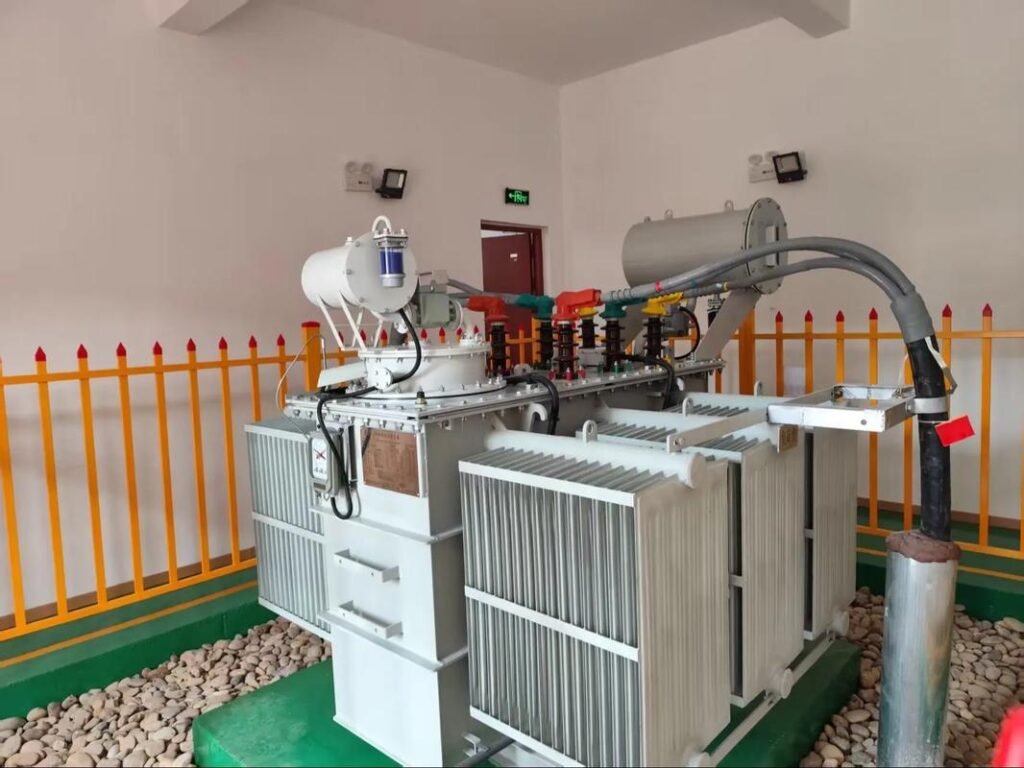
But how exactly does this fingerprinting work, and why is it superior to other diagnostic methods? Understanding the mechanics of SFRA testing will revolutionize how you approach transformer maintenance and save you thousands in unnecessary inspections. Let’s break down the specific capabilities of this vital diagnostic tool.
What does a Sweep Frequency Response Analyzer (SFRA) measure?
Relying solely on standard insulation tests can give you a false sense of security. Insulation might be perfect, but a shifted winding could still cause a breakdown. SFRA solves this by measuring the physical geometry of the active part of the transformer.
An SFRA measures the frequency response of a transformer’s internal RLC (resistance, inductance, and capacitance) network. By injecting a low-voltage signal across a wide frequency range, it measures the impedance, producing a unique baseline fingerprint that reflects the physical geometry of the transformer’s core and windings.
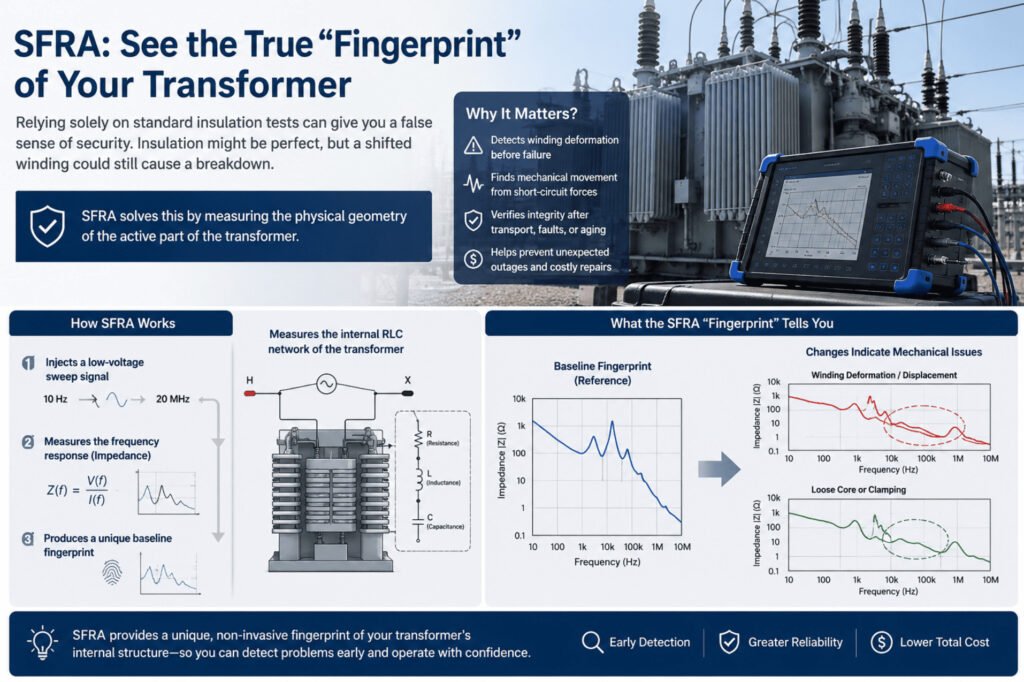
An SFRA does not measure insulation condition like a Megger tester. Instead, it acts as an “X-ray” for the internal structure.
The RLC Network of a Transformer
Every transformer consists of coils (inductance), insulation and oil (capacitance), and conductors (resistance). Together, these form a complex, passive RLC network. Any physical change to the components alters this network, shifting the unique electrical fingerprint.
What Specific Faults Does It Detect?
By comparing the measured frequency response curve against a baseline (or a sister unit), SFRA pinpoints several physical anomalies:
| Physical Fault Type | Typical Cause | Frequency Range Affected |
|---|---|---|
| Core Deformation | Mechanical impact during transport | Low frequencies (20 Hz – 2 kHz) |
| Winding Movement | Short circuit forces or seismic events | Medium frequencies (2 kHz – 20 kHz) |
| Winding Deformation | High fault currents over time | High frequencies (20 kHz – 1 MHz) |
| Loose Connections | Poor installation or vibration | Very high frequencies (> 1 MHz) |
Understanding these frequency bands helps electrical maintenance teams isolate exactly where the damage occurred. Instead of blindly draining the oil and opening the tank—a massive expense—you can confidently decide if physical repairs are necessary based on the SFRA data.
Why is SFRA testing required for power transformers?
Unplanned transformer outages disrupt entire power grids and halt industrial operations. Hoping a transformer survived a severe short-circuit fault without verification is extremely risky. SFRA testing is required because it guarantees the structural integrity of your equipment, preventing disastrous re-energization failures.
SFRA testing is required for power transformers because it is the most reliable, non-intrusive method to detect mechanical damage after transit, short-circuit faults, or seismic events. It ensures the transformer is structurally safe to operate, preventing catastrophic failures and extending the asset’s overall lifespan.
[image placeholder]
The High Cost of Blind Assumptions
For EPC contractors and power utility companies, a damaged transformer is a massive liability. Opening a transformer tank (de-tanking) to inspect for physical damage costs tens of thousands of dollars and introduces moisture and contaminants into the active part. SFRA testing eliminates this requirement by providing precise external diagnostics.
Primary Reasons to Mandate SFRA Testing
There are critical moments in a transformer’s lifecycle where structural verification is non-negotiable:
- Post-Transport Verification: When shipping a transformer globally (e.g., from a factory in China to a substation in the Middle East), transport shocks happen. SFRA confirms if the internal geometry shifted during transit.
- Post-Fault Analysis: After a severe external short circuit, the massive electromagnetic forces can crush or warp windings. SFRA verifies if the transformer survived intact.
| Scenario | Why SFRA is Critical | Expected Outcome |
|---|---|---|
| Factory Acceptance Test (FAT) | Establishes the initial “fingerprint” before it leaves the factory. | Baseline reference for all future tests. |
| Post-Relocation/Transit | Verifies no internal components shifted during rough handling. | Determines if the transformer can be safely energized. |
| After a Grid Fault | Assesses winding deformation caused by short-circuit currents. | Prevents catastrophic failure upon restart. |
How does SFRA detect transformer winding deformation?
Winding deformation is a silent killer; it doesn’t always trigger immediate alarms, but it dramatically reduces the transformer’s ability to withstand future electrical stress. SFRA detects these microscopic shifts before they compromise your entire power system.
SFRA detects winding deformation by identifying deviations between a new frequency response trace and a baseline trace. Because the winding’s physical shape dictates its capacitance and inductance, any deformation changes the RLC network, causing noticeable shifts in the medium to high-frequency response curves.
The Principle of Fingerprint Comparison
Think of the SFRA trace as a human fingerprint. No two transformers (unless perfectly identical sister units) have the exact same curve. When we inject a swept frequency—typically from 20 Hz to 2 MHz—the transformer responds with specific resonance and anti-resonance peaks based on its internal geometry.
The Detection Process
When a short circuit occurs, the electro-dynamic forces can cause the winding to buckle, telescope, or tilt. This physical shift alters the local capacitance between the winding and the core, or between the individual winding turns themselves.
Trace Analysis and Interpretation
When an engineer conducts the test, they compare the active curves against the baseline based on specific criteria:
| Curve Deviation Feature | Indicated Mechanical Fault |
|---|---|
| Shift in Resonance Frequencies | Radial deformation or bulk winding movement. |
| Appearance of New Peaks | Severe localized damage or shorted turns. |
| Changes in Magnitude (dB) | Changes in resistance or ground connections. |
| Loss of Anti-Resonance | Significant winding buckling or collapse. |
By treating the winding as an intricate RLC circuit, SFRA provides a mathematical and visual representation of the deformation. Our clients find this particularly useful because they don’t have to guess; the graphical shift on the SFRA software clearly dictates whether the winding has been compromised. This objective data is crucial for warranty claims and insurance assessments.
What is the difference between SFRA and Tan Delta testing?
Confusing your testing methods can lead to incomplete diagnostics. If you only use a Tan Delta tester, you might think your transformer is healthy, completely missing severe mechanical damage. Understanding the difference between SFRA and Tan Delta is crucial for comprehensive maintenance.
The main difference is their diagnostic focus: SFRA measures the physical geometry and mechanical integrity of the transformer’s core and windings. In contrast, Tan Delta (Dissipation Factor) testing measures the condition, degradation, and moisture content of the transformer’s electrical insulation system.
Two Different Tests for Two Different Problems
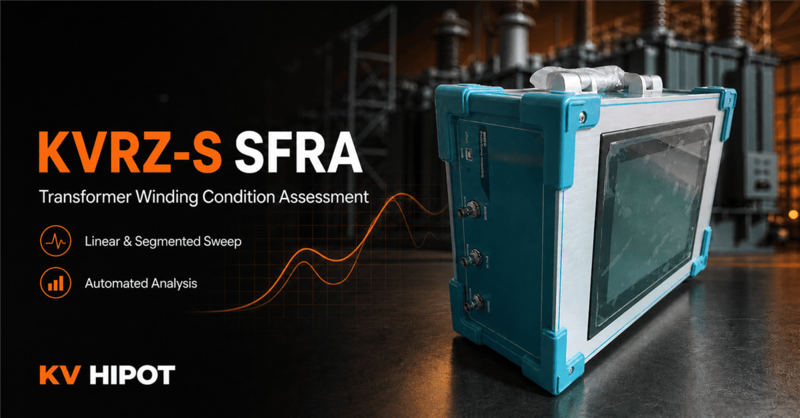
At KV HIPOT, we manufacture both SFRA equipment and Tan Delta testers because they serve complementary but entirely different purposes. You cannot substitute one for the other if you want complete diagnostic coverage.
Breaking Down the Differences
SFRA focuses strictly on the physical layout. If a transformer is dropped, the insulation might still be perfectly dry and intact, meaning a Tan Delta test would pass. However, the windings might have telescoped. Only the SFRA will catch this physical shift.
Here is a detailed comparison to help procurement managers and technical engineers select the right test:
| Caratteristica | Sweep Frequency Response Analyzer (SFRA) | Tan Delta (Dissipation Factor) Tester |
|---|---|---|
| Primary Purpose | Detects mechanical deformation and movement. | Detects insulation degradation and moisture. |
| What it Measures | Impedance/Frequency response (RLC network). | Dielectric losses in the insulation. |
| Key Triggers for Testing | After transport, short circuits, or earthquakes. | Routine preventive maintenance, aging assessment. |
| Result Output | Frequency response curves (Bode plots). | Capacitance and Dissipation Factor values. |
| De-tanking Required? | No, completely non-intrusive. | No, completely non-intrusive. |
Why You Need Both
For total peace of mind, high-voltage laboratories, EPC contractors, and third-party testing services utilize both. Tan Delta ensures the “chemical and dielectric” health of the paper and oil, while SFRA ensures the “structural and mechanical” health of the copper and iron.
Can an SFRA test detect partial discharge activity?
Partial discharge is a localized dielectric breakdown that slowly eats away at transformer insulation. Trying to use an SFRA to find partial discharge will leave you frustrated and unprotected, as it is the wrong tool for the job. You need the right technology.
No, an SFRA test cannot detect partial discharge (PD) activity. SFRA is designed exclusively to detect mechanical deformation and physical shifts in the winding and core. To detect partial discharge, you must use specialized PD measurement equipment or perform Dissolved Gas Analysis (DGA).
The Limitations of SFRA
While SFRA is incredibly powerful for mechanical fault diagnosis, it is completely blind to electrical ionization processes like partial discharge. Since SFRA tests are conducted offline using very low voltages (typically 10V to 20V), these voltages are not nearly high enough to stress the insulation and trigger a partial discharge event inside the tank.
How to Properly Detect Partial Discharge
If you suspect insulation breakdown, corona, or voids within your epoxy or paper insulation, you need to employ different diagnostic tools.
| Diagnostic Method | Il migliore per | How It Works |
|---|---|---|
| Partial Discharge (PD) Tester | Real-time tracking of insulation breakdown. | Uses high voltage to induce and measure high-frequency discharge pulses. |
| Dissolved Gas Analysis (DGA) | Long-term monitoring of internal faults. | Analyzes transformer oil for hydrogen and other combustible gases caused by PD. |
| SFRA | Mechanical integrity only. | Low voltage frequency sweep to detect geometry changes. |
A Comprehensive Testing Strategy
If a transformer has suffered a severe short circuit, the physical force might deform the winding (detected by SFRA). This deformation might tear the paper insulation, creating a void. Later, when energized, this void will cause partial discharge (detected by PD testers or DGA). Therefore, while SFRA does not detect PD directly, it detects the mechanical damage that often leads to partial discharge. For complete diagnostics, teams must use a combination of SFRA, PD testers, and oil test equipment.
When should you perform a sweep frequency response analysis?
Waiting for a transformer to fail before running diagnostics is a costly mistake. If you don’t know the precise moments when SFRA testing is mandatory, you risk energizing a compromised transformer, leading to catastrophic explosions and prolonged grid blackouts.
You should perform an SFRA test during factory acceptance, after major transportation or relocation, following severe short-circuit faults, after earthquakes, and routinely every 5 to 10 years. It should also be conducted before and after any major internal repairs to verify structural integrity.
Establishing the Baseline
The most critical time to perform an SFRA test is before the transformer ever leaves the manufacturing plant. This Factory Acceptance Test (FAT) creates the foundational “fingerprint.” Without this baseline, future tests are much harder to interpret, though comparing sister units (identical transformers from the same batch) is a valid alternative.
Critical Triggers for SFRA Testing
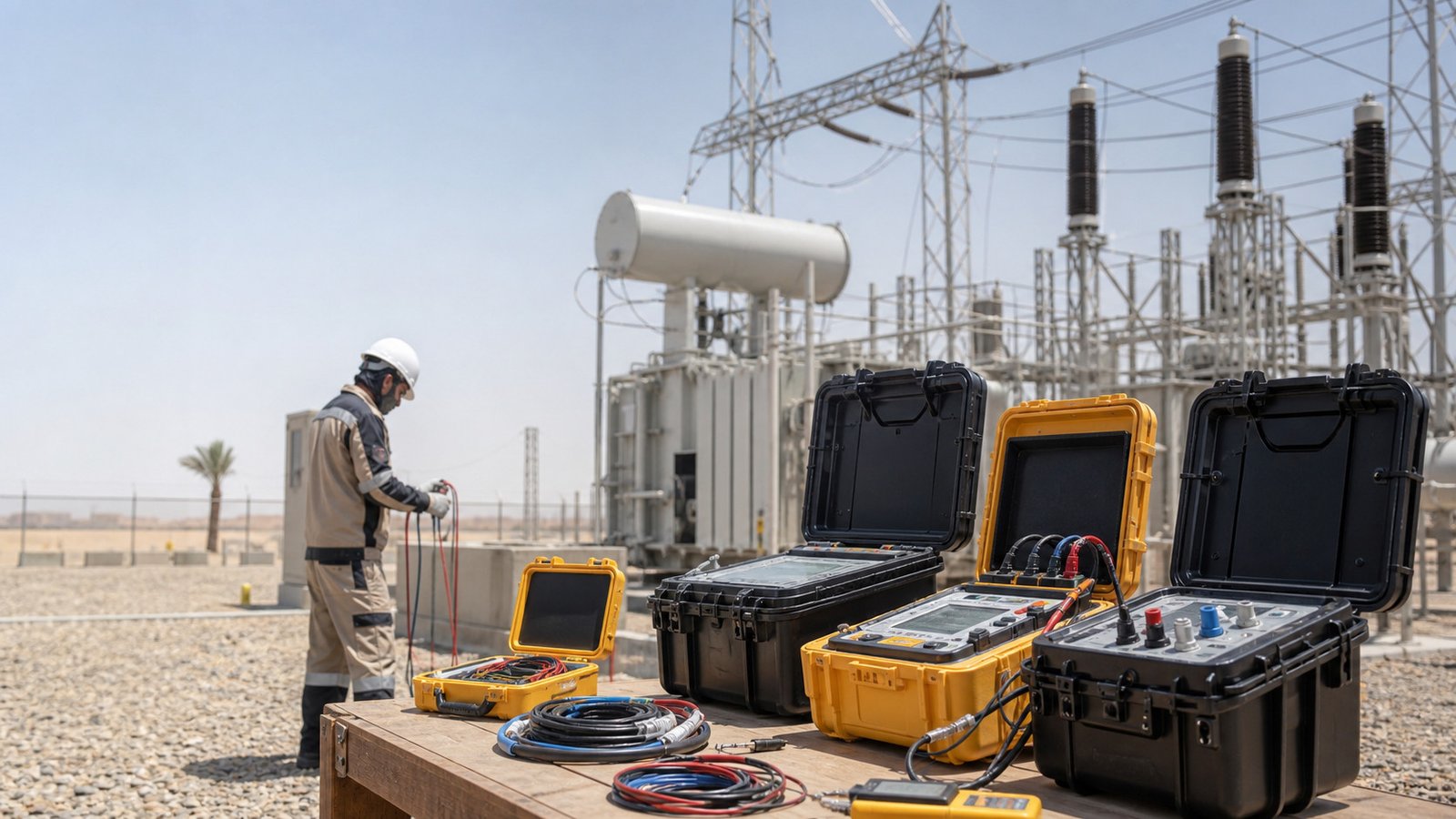
As an international supplier of high-voltage testing equipment, we strongly advise our EPC contractors and utility clients to mandate SFRA in specific high-risk scenarios:
Standard Testing Schedule
| Event / Milestone | Purpose of SFRA Test |
|---|---|
| Factory Commissioning (FAT) | To generate the baseline reference curve. |
| Arrival at Substation | To prove no mechanical damage occurred during shipping/handling. |
| Post-Short Circuit Fault | To verify windings haven’t deformed before re-energizing the grid. |
| Post-Earthquake | To check if seismic activity shifted the heavy internal core. |
| Routine Maintenance (5-10 yrs) | To monitor for slow, progressive mechanical relaxation. |
Avoiding Unnecessary Costs
Testing at these precise intervals saves immense resources. For example, if a transformer trips offline due to a grid fault, running an SFRA test takes just a few hours. If the curves match the baseline, you can safely re-energize immediately. Without SFRA, you would face the dilemma of either risking a massive failure or spending weeks performing a visual internal inspection.
Conclusione
SFRA is an indispensable diagnostic tool for the modern power industry. By treating the transformer’s internal structure as a complex RLC network, it provides a highly accurate, non-intrusive “fingerprint” of the mechanical geometry. While it doesn’t replace insulation testers like Tan Delta, it uniquely identifies hidden winding deformations and core shifts caused by transit shocks or short circuits. For power contractors and utility companies, investing in a reliable Sweep Frequency Response Analyzer ensures grid stability, prevents catastrophic failures, and eliminates the massive costs associated with unnecessary de-tanking inspections.

 English
  ไทย
ไทย  Tiếng Việt
  العربية
  Русский
  Italiano
  Español
  한국어
한국어  Português do Brasil
  Français
  Español de México
  Português
  Türkçe
  Čeština
  Español de Argentina
  Slovenčina
  Dansk
Dansk  Polski
  Deutsch
  Ελληνικά
  O‘zbekcha
  Bahasa Indonesia
  Română