

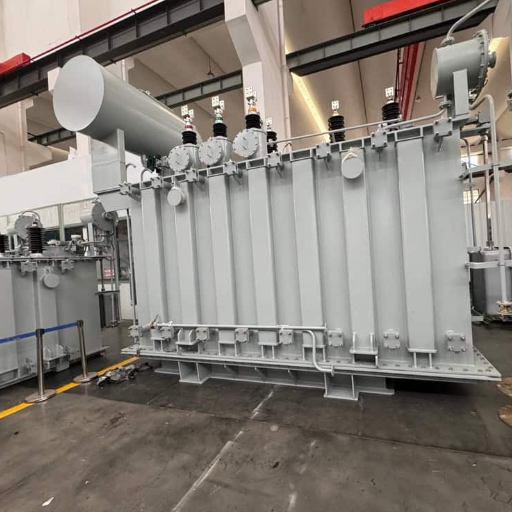
Substation commissioning is hard work. Bad transformer tests cause huge power failures later. I will show you how to do no-load and load tests the right way. You perform these tests by applying voltage to one winding while keeping the other open or shorted. The no-load test measures core loss by opening the secondary winding. The load test measures copper loss by shorting the secondary winding. Both ensure the transformer matches its nameplate data. Let us look at the exact steps you need to take on the site. If you skip these details, you might install a bad transformer. Read on to learn the exact methods for accurate testing.
What is the main purpose of no-load (open-circuit) and load (short-circuit) testing in substations?

Are you worried about installing a defective transformer? Guessing its condition is a big risk. These tests give you the exact health data of your equipment before you start it. The main purpose is to check the transformer’s nameplate data before use. The no-load test measures iron losses in the core. The load test measures copper losses in the windings. These tests prove the transformer can handle its expected power load safely. ! I have seen many electrical contractors face big problems during substation commissioning. They sometimes trust the factory papers too much. They turn on the power without checking. Then, the transformer fails.
This happens because shipping can easily damage the core or the windings. You must verify the nameplate data yourself on the site. The no-load test, also called the open-circuit test, checks the iron core. It shows you the core loss and the no-load current. If the core has damage, the loss will be too high. The load test, also called the short-circuit test, checks the copper wires inside. It measures the copper loss and the impedance voltage. These two tests tell you the true efficiency of the transformer. When we make transformer testing equipment at our factory in China, we design it to give you clear numbers. Our clients often tell us how our tools help them find hidden defects. You do not want to skip this important step. If you skip it, the repair costs will be huge later. We can provide custom solutions to fit your exact test needs.
| Test Türü | Part Tested | Measurement Focus |
|---|---|---|
| No-Load Test | Iron Core | Core loss and no-load current |
| Load Test | Copper Windings | Copper loss and impedance voltage |
How do you measure transformer core loss (iron loss) accurately according to IEC 60076?
Measuring core loss can give you wrong numbers. Using basic tools leads to false failure reports. You must use specialized equipment designed for low power factor conditions. To measure core loss accurately per IEC 60076, you apply rated voltage to the low-voltage winding. You leave the high-voltage winding open. You must use a high-accuracy power analyzer. This tool must handle very low power factors to avoid big phase angle errors.
Let me share a true story from one of our power contractor clients. They used a standard multimeter to test a new transformer. The tool showed a huge core loss. They thought the transformer was broken. We told them to use our specialized transformer tester instead. They did, and the numbers were perfect. Why did this happen?
During a no-load test, the power factor is very low. It is often below 0.1. Basic multimeters or normal power analyzers cannot measure true power at this low level. They have bad phase angle errors. This creates distorted core loss measurements. The IEC 60076 standard says you must be very precise. You must use equipment with high-accuracy voltage and current channels. We build our KVHIPOT testers exactly for this hard job. They handle low power factor conditions easily. You will not get false failure evaluations. Accurate tools save you time. They also stop bad arguments with the transformer manufacturer. You will know the exact iron loss. Our factory direct supply gives you these accurate tools quickly.
| Tool Type | Power Factor Handling | Accuracy Level | Test Result |
|---|---|---|---|
| Standard Multimeter | Poor | Düşük | False failure report |
| Specialized Tester | Yüksek | Çok Yüksek | True iron loss value |
What is the standard procedure for a transformer short-circuit impedance test?
Doing an impedance test wrong can ruin your data. A bad connection ruins the whole test. Follow a strict process to get the right numbers every single time. First, you short-circuit the low-voltage winding with thick cables. Next, you apply a small controlled voltage to the high-voltage winding. You increase the voltage until the rated current flows. Finally, you record the voltage, current, and power to calculate the short-circuit impedance.
The short-circuit impedance test is a very important part of the load test. You must be very careful with your setup. I always tell our buyers to check their cables first. The cables used to short the low-voltage side must be very thick. If they are too thin, they add extra resistance. This extra resistance will change your test results.
After the cables are set, you connect your test equipment to the high-voltage side. You slowly raise the test voltage. You watch the current meter very closely. You stop raising the voltage when the current reaches the rated value for that winding. At this point, your test machine records the data. It measures the active power and the reactive power. This shows you the copper losses. We customize our testing machines so you can read these values easily on one screen. The screen shows you exactly what is happening inside the windings. This simple procedure proves if the transformer can handle a real fault in the future. We test all our equipment before shipping so you get reliable results.
| Step | Action |
|---|---|
| 1 | Short the low-voltage side with thick cables. |
| 2 | Connect the test equipment to the high-voltage side. |
| 3 | Slowly increase the voltage. |
| 4 | Stop at the rated current value. |
| 5 | Record the active and reactive power. |
Why do we perform open circuit and short circuit tests on transformers before energization?
Turning on an untested transformer is dangerous. It can blow up and destroy the substation. Testing before energization removes these big risks and keeps your workers safe. We do these tests before energization to verify the transformer has no internal faults from shipping or poor manufacturing. The open circuit test ensures the core is safe. The short circuit test ensures the windings are intact. Together, they confirm the transformer is ready for real power.
You cannot trust visual inspections alone. A transformer might look perfect on the outside. But inside, it could have serious hidden problems. A heavy drop during transport can shift the heavy iron core. This shift will change the core loss. Bad factory work can leave weak spots in the copper windings. The load test will find these weak spots quickly. If you energize a bad transformer, the sudden high voltage will cause a big short circuit. The machine will catch fire. Your project will face a delay of many months.
You will lose a lot of money. When you test it first, you get real data. You compare this real data to the factory nameplate. If the numbers match, you know the equipment is completely safe. At our company, we ship our test equipment fast. We know you cannot wait when a project deadline is close. Our tools give you the confidence to turn the power on. You protect your big investment by finding problems early. You keep your workers safe from harm.
| Problem Source | Test Used to Find It | What Happens if Ignored |
|---|---|---|
| Shipping Damage | No-Load Test | Overheating and core damage |
| Bad Factory Work | Load Test | Short circuit and fire |
Sonuç
Transformer No-load and load tests are vital for substation commissioning. By using accurate tools for core loss and impedance, you ensure safe and reliable transformer operation for many years.

 English
  ไทย
ไทย  Tiếng Việt
  العربية
  Русский
  Italiano
  Español
  한국어
한국어  Português do Brasil
  Français
  Español de México
  Português
  Türkçe
  Čeština
  Español de Argentina
  Slovenčina
  Dansk
Dansk  Polski
  Deutsch
  Ελληνικά
  O‘zbekcha
  Bahasa Indonesia
  Română