


Testing new cables with old methods destroys them. A ruined cable costs thousands of dollars and delays your project. VLF testing solves this problem safely. VLF (Very Low Frequency) testing is much safer than DC hipot testing for modern power cables. VLF uses a 0.1Hz alternating current that finds defects without harming the cable insulation. DC testing traps dangerous charges inside the cable that cause sudden breakdowns later. Many contractors still use cheap DC testers on expensive modern cables. This mistake will burn your cable the moment you turn the power back on. Let us look at why this happens.
What are the hidden dangers of DC testing on XLPE cables?
Old DC testers look cheap and easy to use. But they secretly ruin modern solid cables. You need to know these hidden risks before your next test. DC testing is very dangerous for XLPE (cross-linked polyethylene) cables. The steady DC voltage injects electrical charges deep into the plastic insulation. These charges stay trapped inside. When you put the cable back into AC service, these trapped charges cause sudden explosions and cable failures. I talk to power contractors every week. Many of them want to buy a simple DC Hipot Tester because it is small and cheap. I always stop them if they test XLPE cables.
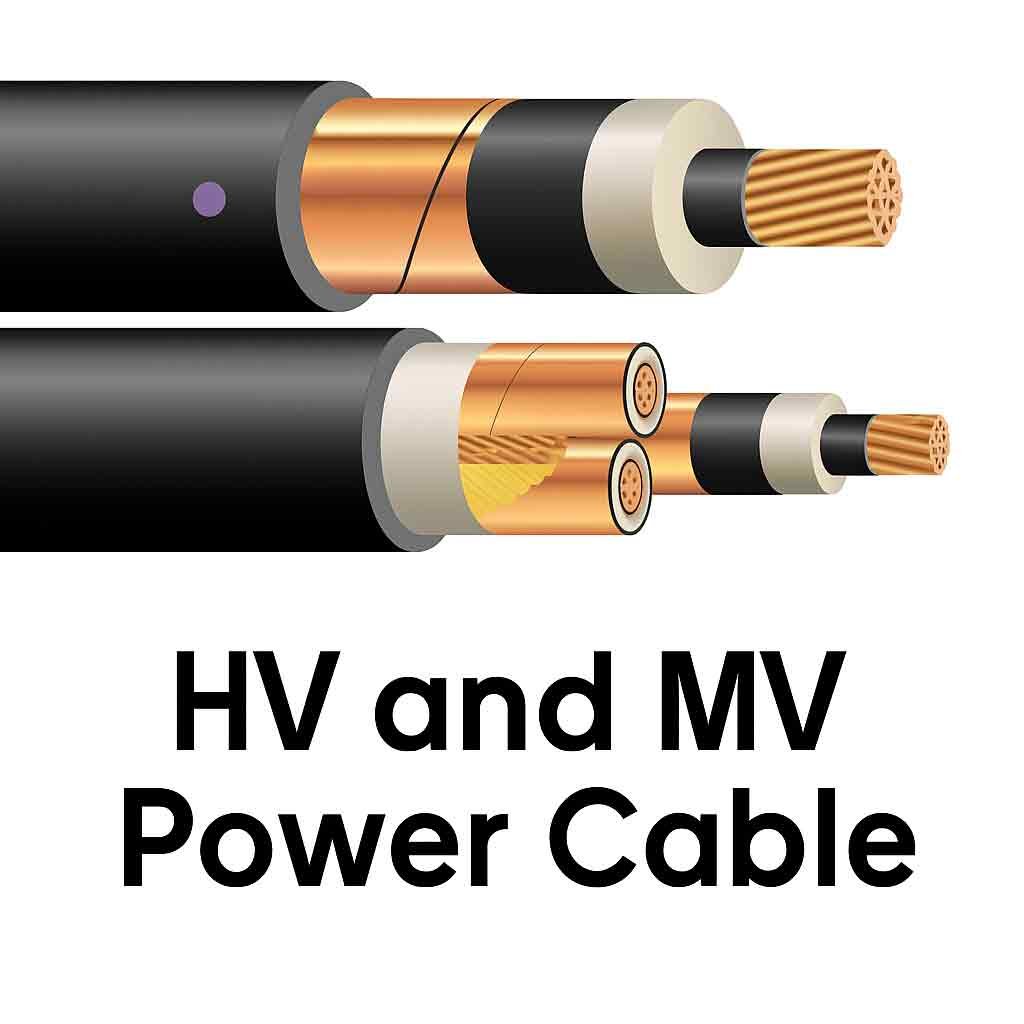
XLPE cables are the standard for modern power grids today. They use a solid plastic insulation. This plastic is very different from old oil-filled cables. When you apply high DC voltage to XLPE, the plastic acts like a sponge for electricity. It absorbs the energy and holds it. We call this the space charge effect. When you finish the test, the cable looks fine. It passes the DC test perfectly. But the danger hides inside. You connect the cable back to the normal AC grid. The grid sends standard 50Hz or 60Hz power through the line.
The new AC voltage crashes into the trapped DC space charge. This crash creates a massive voltage spike inside the plastic. The insulation breaks down instantly. Your brand new cable blows up. This failure wastes a lot of money. It also ruins your company reputation. You must stop using DC hipot on XLPE immediately.
| Cable Type | Old Paper/Oil Cables | Modern XLPE Cables |
|---|---|---|
| DC Test Safety | Safe | Very Dangerous |
| Risk of Trapped Charge | Low | Extremely High |
| Post-Test Failure Risk | Low | Very High |
| Ação recomendada | DC Hipot is acceptable | Never use DC Hipot |
Why is 0.1Hz VLF the IEEE recommended standard?
Ignoring global standards causes failed inspections and rejected projects. Your clients demand proof of safe testing. Using the IEEE recommended VLF standard solves your compliance problems instantly. The IEEE 400.2 standard recommends 0.1Hz VLF testing because it works like regular grid power but requires much less equipment size. The 0.1Hz frequency changes direction slowly. This slow change stops charges from getting trapped while still finding real physical defects in the cable. The Institute of Electrical and Electronics Engineers (IEEE) sets the rules for our industry. Their IEEE 400.2 standard clearly says we must use Very Low Frequency (VLF) for testing shielded power cables. I always tell my customers to read this standard. It protects them from bad testing habits.
Why did IEEE choose 0.1Hz? Normal grid power runs at 50Hz or 60Hz. Testing a long 110kV cable at 60Hz needs a giant machine. The cable has high electrical capacitance. It needs too much reactive power. If we drop the frequency to 0.1Hz, the power need drops by 600 times. You get the safety of an AC test in a small portable box. VLF Hipot Tester changes the voltage polarity every five seconds. This alternating action sweeps away any electrical charge. It never lets the charge build up and get trapped in the XLPE plastic. The IEEE test proves that VLF safely finds bad joints and water trees without hurting the good insulation. This standard gives you a clear and safe path for cable commissioning.
| Standard Factor | DC Testing | 0.1Hz VLF Testing |
|---|---|---|
| IEEE 400.2 Approval | Not Recommended for XLPE | Highly Recommended |
| Power Requirement | Very Low | Very Low |
| Voltage Polarity | Constant | Alternating every 5 seconds |
| Test Result Meaning | Poor for modern cables | Accurate and reliable |
How do space charge effects work explained simply?
Engineers use big words to explain cable physics. This confuses normal field workers. You need a simple way to understand space charges to keep your work safe. Imagine space charges as tiny static electricity balls stuck inside the cable plastic. DC voltage pushes these balls deep into the material. Because the plastic is an insulator, the balls cannot escape. They wait there until normal AC power hits them, causing a destructive electrical crash. I want to explain space charges in plain English. You do not need a science degree to understand this. Think of your XLPE cable insulation as a thick rubber wall. This wall stops electricity from escaping the copper wire.
When you use a DC Hipot Tester, it acts like a strong wind blowing in only one direction. This strong wind pushes tiny electrical particles deep inside the rubber wall. Because the wind never changes direction, the particles get stuck there. These stuck particles are the space charge.
Now, you finish the test and turn on the normal AC power grid. AC power acts like a wind that changes direction 50 or 60 times every second. This fast wind slams into the stuck particles. The impact creates a tiny explosion inside the rubber wall. The wall cracks. Electricity escapes. The cable fails. A VLF tester prevents this completely. It blows the wind forward for five seconds, then backward for five seconds. The particles move in and out. They never get stuck. This simple push and pull keeps the rubber wall strong and safe.
| Physics Concept | DC Wind Effect | VLF Wind Effect (0.1Hz) |
|---|---|---|
| Voltage Direction | One way only | Changes every 5 seconds |
| Particle Movement | Pushed deep and stuck | Moves back and forth |
| Space Charge Buildup | Very high | Zero |
| Cable Safety | Destroys the wall | Protects the wall |
What is a quick checklist for transitioning your team to VLF?
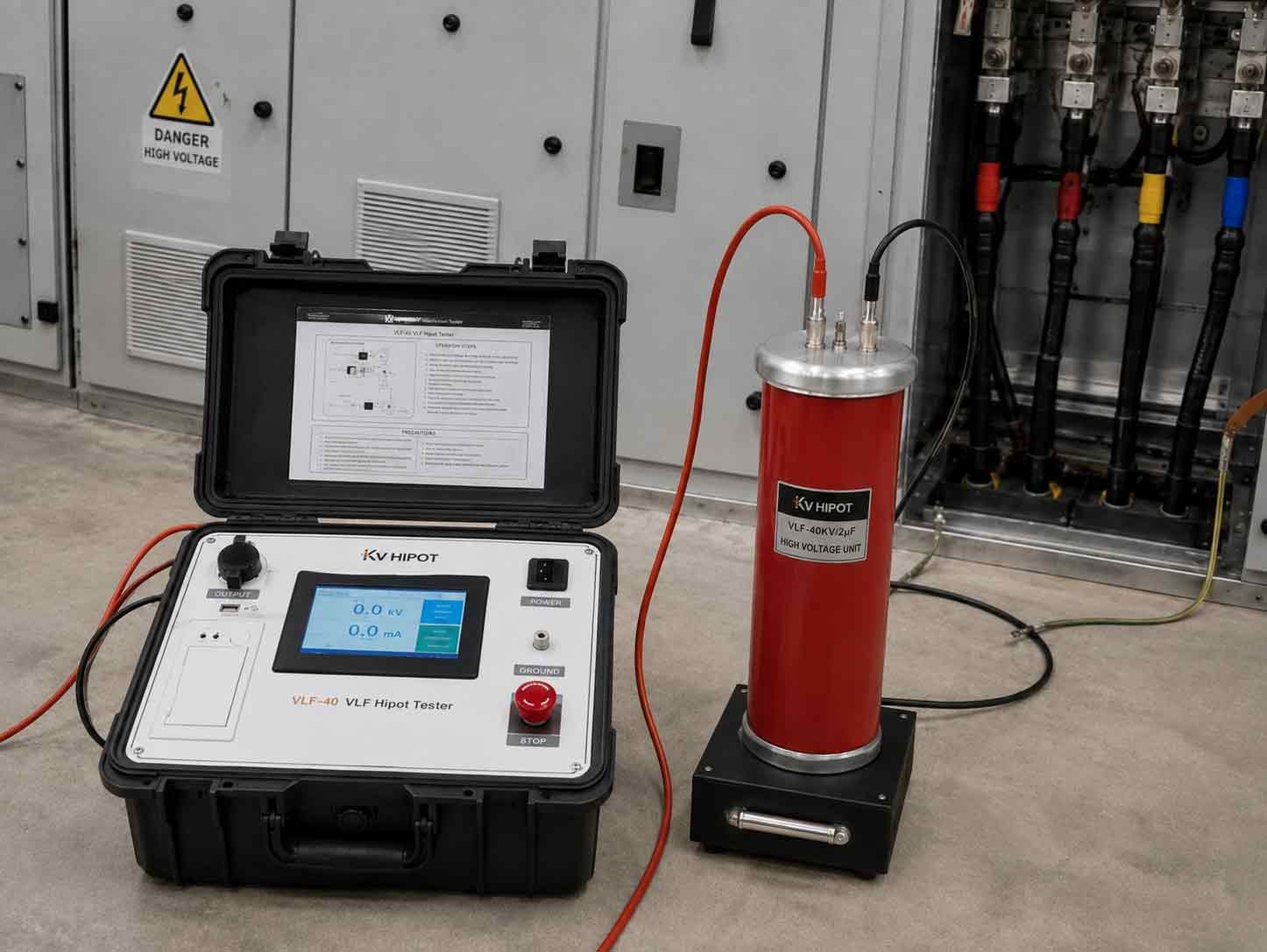
Changing your test tools feels scary and confusing. Your team might make dangerous mistakes with new gear. A simple step-by-step checklist makes this transition smooth and safe. Transitioning to VLF requires three simple steps. First, stop all DC testing on XLPE cables. Second, buy a true sine wave 0.1Hz VLF Hipot Tester. Third, train your staff to read the IEEE 400.2 test voltage charts. This ensures your team tests cables safely every time. I help many power contractors move from old DC testers to modern VLF systems. It is not hard if you follow a plan.
As a factory supplier, I see teams succeed when they use a simple checklist. First, you must throw away the DC testers for cable work. You can keep them for testing vacuum circuit breakers, but never let them near an XLPE cable again. Second, choose the right VLF tester. You need a machine that produces a true sine wave, not a cheap square wave. A true sine wave mimics the real power grid perfectly. Third, look at your cable lengths.
A standard VLF machine tests up to a few kilometers. If you have very long cables, tell me the capacitance so I can give you the right power rating. Finally, print the IEEE 400.2 test voltage table. Put it in every work truck. Your operators must know the exact voltage to apply based on the cable class. This checklist stops guessing. It makes your field work professional, fast, and completely safe.
| Transition Step | Action Required | Benefit for the Team |
|---|---|---|
| 1. Stop DC on Cables | Ban DC Hipot for XLPE | Stops cable damage |
| 2. Buy True Sine VLF | Get a 0.1Hz VLF Tester | Meets IEEE standards |
| 3. Check Cable Length | Match tester to capacitance | Ensures tester works on site |
| 4. Use IEEE Charts | Follow IEEE 400.2 tables | Gives correct test voltages |
VLF testing is the only safe way to test modern XLPE power cables. It stops space charge damage, follows IEEE standards, and saves your expensive electrical assets from sudden failure.

 English
  ไทย
ไทย  Tiếng Việt
  العربية
  Русский
  Italiano
  Español
  한국어
한국어  Português do Brasil
  Français
  Español de México
  Português
  Türkçe
  Čeština
  Español de Argentina
  Slovenčina
  Dansk
Dansk  Polski
  Deutsch
  Ελληνικά
  O‘zbekcha
  Bahasa Indonesia
  Română