

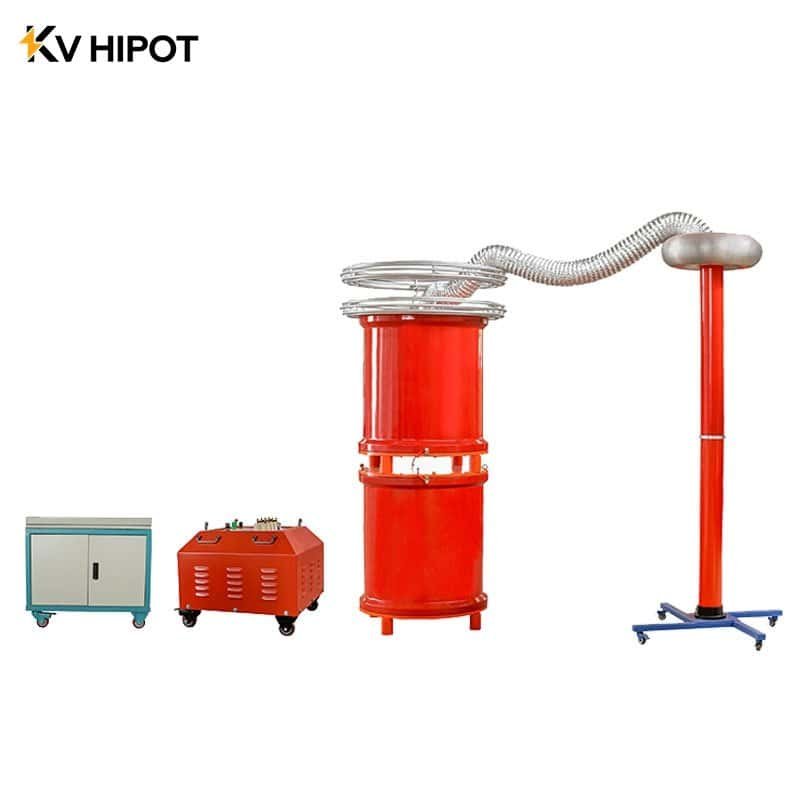
Testing long cables demands huge power, and standard testers fail. This delays projects and costs money. An AC resonance test system solves this heavy power problem immediately. An AC resonance test system is a high-voltage testing device that uses a reactor and the test object’s capacitance to create a resonant circuit. It matches reactances, requiring a very small input power source to generate massive testing voltages for large electrical equipment. We often see testing teams struggle to move massive power supplies to field sites. Let me explain how resonance testing makes this job much easier and safer.
What is an AC resonant test system?
When you need to test large electrical equipment, the power requirement becomes a nightmare. Standard testers are too heavy to move. An AC resonant test system fixes this by using smart circuit design to shrink the equipment size.
A series resonance test system is an indispensable piece of equipment in electrical testing, specifically designed for conducting series resonance AC withstand voltage tests. Its operating principle is based on the series resonance principle: the series resonance circuit is excited via an excitation transformer, and the output frequency of the frequency converter is adjusted to bring the circuit’s inductance and the capacitance of the test specimen into a resonant state.
At this point, the resonant voltage is applied to the test specimen. The device consists of a variable-frequency power supply, an excitation transformer, a reactor, and a capacitive voltage divider. It ensures that, under resonant conditions, circuit impedance is minimized and current reaches its maximum value, thereby enabling efficient and precise testing of electrical equipment.
Due to its unique circuit characteristics—namely, that the voltage across the capacitor is equal in magnitude but opposite in phase to the voltage across the inductor, and the voltage across the resistive element equals the supply voltage—the series resonance device is widely used in the field of power testing and has become an essential tool for AC withstand voltage testing of electrical equipment.
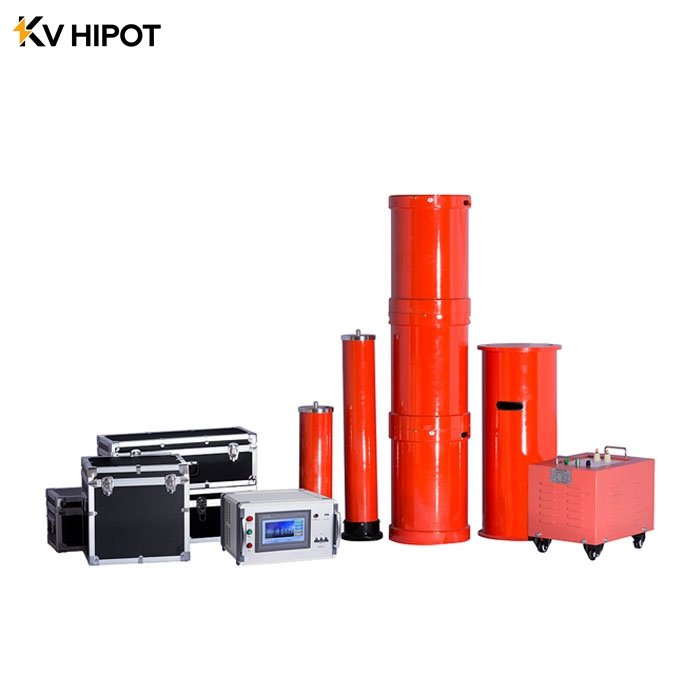
An AC resonant test system is specialized equipment used to perform high-voltage testing on high-capacitance loads like long XLPE cables and GIS. It uses a variable frequency power source and a reactor to create series resonance, drastically reducing the needed input power.
At KVHIPOT, I always tell our clients that testing large capacitive loads requires a smart approach. Large electrical devices act like giant batteries. They store massive amounts of energy. If you try to push voltage into them using brute force, you need a huge power supply.
An AC resonant test system changes the rules. It uses a reactor. We also call this an inductor. We connect this reactor in series with your test object. By changing the frequency of the power, usually between 20Hz and 300Hz, the system finds a sweet spot. We call this the resonance point. At this point, the energy bounces back and forth between the reactor and the test object. The main power source only needs to replace the small amount of energy lost to heat. This means you can use a small power supply to create a very high test voltage. It makes the equipment portable and perfect for field testing. You save time and money on transportation.
| الميزة | Description | Benefit |
| Variable Frequency | Adjusts from 20Hz to 300Hz | Finds the exact resonance point easily. |
| Small Power Source | Uses less than 5% of total test power | Makes the system highly portable for field use. |
| High Output Voltage | Generates massive test voltage | Tests large cables and GIS up to IEC standards. |
| Self-Protecting | Resonance drops if a fault occurs | Prevents damage to the test equipment and object. |
What is the difference between AC hipot and AC resonance?
Many engineers use an AC hipot for everything and face overheating issues on large cables. This damages the tester and ruins the test. Knowing the difference between AC hipot and AC resonance saves your equipment. An AC hipot pushes full testing power directly into the object, requiring a massive power source.
AC resonance system creates a resonant circuit to multiply the voltage, requiring only a tiny power source to cover the small resistive losses. I see many electrical contractors try to use a standard AC hipot to test a 5-kilometer XLPE cable. They fail every time. The long cable draws too much capacitive current. The AC hipot trips because it simply cannot provide enough power.
An AC hipot is basically a big step-up transformer. It is great for small objects like switchgear or short busbars. But it works by brute force. If the test object needs 100kVA of power, the hipot must supply exactly 100kVA.
An AC resonance system works smarter. It balances the capacitive reactance of the cable with the inductive reactance of the reactor. Because of this balance, the main power supply only provides the active power. This active power is usually less than 5% of the total reactive power. This huge difference means a 5kVA input can generate 100kVA of testing power. This makes a massive difference when you are working in remote substations or offshore wind farms.
| Comparison Point | Traditional AC Hipot | نظام اختبار الرنين في التيار المتردد |
| Power Source Size | Massive. It must match the total load. | Very small. It only supplies 5% loss. |
| Best Application | Small objects, short cables, switchgear. | Long XLPE cables, large GIS, big transformers. |
| Equipment Weight | Very heavy and hard to transport. | Modular, lightweight, and easy to move. |
| Fault Damage Risk | High fault current damages the test object. | Low fault current. The resonance stops instantly. |
How does a series resonant circuit work in high voltage testing?
Understanding circuit behavior is difficult, and guessing the setup leads to failed tests. If you do not match the frequencies, you get zero test voltage. Learning how series resonance works gives you perfect test results. A series resonant circuit works by placing an inductor in series with the capacitive test object. When you adjust the power frequency to match the natural frequency, inductive and capacitive reactances cancel out.
This allows maximum voltage generation with minimal power. Let me explain series resonance in simple terms. Think of pushing a child on a swing. If you push at the exact right time, the swing goes very high with very little effort. In electrical testing, this “right time” is the resonant frequency.
Every long cable or GIS has capacitance. Our test system provides a reactor. This reactor has inductance. In an alternating current (AC) circuit, capacitance pushes the current one way. Inductance pushes the current the exact opposite way. When we adjust the frequency of our power source, we try to make these two opposing forces perfectly equal. According to electrical physics principles, when inductive reactance equals capacitive reactance, they cancel each other out completely. At this moment, the circuit only has a tiny amount of electrical resistance left. The small input voltage multiplies across the reactor and the test object. This allows us to reach hundreds of kilovolts easily and safely.
| Circuit Component | Role in the System | Electrical Behavior |
| Test Object (Cable) | Acts as a Capacitor | Stores electrical energy and creates capacitive reactance. |
| Reactor (Inductor) | Acts as an Inductor | Creates inductive reactance to balance the cable. |
| Variable Power Source | Finds the Frequency | Adjusts output from 20Hz to 300Hz to match reactances. |
| Exciter Transformer | Injects Input Power | Steps up initial voltage to feed the resonant circuit. |
Why use an AC resonant test system for high-capacitance cables?
Long XLPE cables act like giant capacitors that absorb massive energy. Using standard equipment leads to instant power trips and failed site tests. An AC resonant system provides the exact solution for this capacitive burden. You must use an AC resonant test system for high-capacitance cables because standard testers cannot supply the massive reactive power needed. Resonance testing balances this capacitance, allowing a lightweight, portable system to perform the test safely without burning out. I work with power contractors every day.
Their biggest problem is always testing long underground or submarine XLPE cables. A single kilometer of 110kV cable has a very high capacitance. Under a standard 50Hz or 60Hz AC test, this cable demands hundreds of amperes of testing current. If you use a traditional tester, you would need a generator the size of a truck just to power the test. This is impossible for most field operations. The AC resonant test system solves this capacitive problem brilliantly.
By creating series resonance, the system provides its own reactive power internally. The energy simply moves between the reactor and the cable. Also, if the cable breaks down during the test, the capacitance drops instantly. This breaks the resonance condition. The high voltage collapses immediately. This rapid drop prevents a huge fault current from burning the cable to ashes. It protects your expensive cable and your test engineers at the same time.
| Testing Challenge | Problem with Standard Tester | Solution via AC Resonance |
| High Capacitive Current | Needs massive input power to run the test. | Balances capacitance. It needs tiny input power. |
| Transportation to Site | Equipment is too large and very heavy. | Reactors are modular. You can stack them easily. |
| Cable Breakdown Fault | High arc energy destroys the expensive cable. | Voltage collapses instantly. It creates low arc energy. |
| Waveform Quality | Creates distorted sine waves. | Creates a pure sine wave using the resonant filter. |
الخاتمة
Testing large, high-voltage electrical equipment like long XLPE cables, GIS, and large transformers is a serious challenge. The massive capacitive nature of these objects makes traditional AC testing methods heavy, expensive, and dangerous. The AC resonance test system changes everything. By using the smart principle of series resonance, it cancels out the capacitive reactance. This allows a very small power source to generate the massive test voltages you need for field testing. You save time, you save transportation costs, and you protect your expensive cables from fault damage because the system is self-protecting. The system only provides the small active power needed to cover the resistive losses of the circuit.
At KVHIPOT, we design our AC Resonance Test Systems to meet the exact needs of power contractors and substations. We build them to be modular, reliable, and easy to use in the field. If you understand the difference between standard hipot testing and resonance testing, you will always choose resonance for your large capacitive loads. This technology ensures your high-voltage equipment meets all safety standards before it connects to the grid.



 English
  ไทย
ไทย  Tiếng Việt
  العربية
  Русский
  Italiano
  Español
  한국어
한국어  Português do Brasil
  Français
  Español de México
  Português
  Türkçe
  Čeština
  Español de Argentina
  Slovenčina
  Dansk
Dansk  Polski
  Deutsch
  Ελληνικά
  O‘zbekcha
  Bahasa Indonesia
  Română